
Achieving a perfect aesthetic outcome in the anterior region often presents unique challenges, especially when implant angulation is not ideal. The solution frequently lies in the sophisticated design of modern implant components. Innovations like angled screw channels allow for the relocation of the access hole, preserving the facial surface of the crown and delivering a more natural-looking result. This is just one example of how understanding different dental implant screw types directly impacts the final aesthetic. This article examines the key structural features of implant screws, from specialized designs for aesthetics to the importance of material selection, giving you the knowledge to master both function and form.
Dental implants depend on multiple precision-engineered components, and dental implant screws play a critical role in ensuring long-term stability, function, and aesthetics. These screws secure restorations to implants and directly impact load distribution, maintenance, and patient comfort. Different dental implant screw types are designed to accommodate varying implant systems, restoration designs, and clinical needs. Selecting the correct screw type influences implant success by improving retention, minimizing mechanical complications, and supporting natural-looking restorations. Dentists and orthodontists must evaluate factors such as screw material, angulation, and retention method to achieve predictable, long-lasting results. Below, we break down the most common dental implant screw-related restorations and their applications in modern implantology.
The Dental Implant Procedure Explained
The dental implant process is a multi-stage journey that transforms a patient’s smile from the foundation up. It begins with meticulous planning and ends with the placement of a beautiful, functional restoration. Each step is crucial for ensuring the long-term success and stability of the implant. While every patient’s treatment plan is unique, the procedure generally follows a predictable sequence of events, from the initial consultation to the final crown placement. Understanding this workflow helps manage patient expectations and highlights the importance of precision at every stage, especially when it comes to the components used, like the implant screws that hold everything together.
Consultation and Planning
Every successful implant case starts with a thorough consultation and a detailed treatment plan. This initial phase involves a comprehensive evaluation of the patient’s oral health, including their medical history, jawbone density, and the condition of surrounding teeth. Advanced imaging, such as dental X-rays and 3D cone-beam computed tomography (CBCT) scans, provides a clear picture of the underlying bone structure. This data is essential for determining the ideal implant position, size, and angulation. For dental practices embracing modern workflows, this is also the stage where you can submit digital cases to your lab partner, ensuring the entire process is streamlined for accuracy and efficiency from the very beginning.
Bone Grafting (If Necessary)
For a dental implant to be successful, it needs a solid foundation of healthy jawbone to fuse with. If a patient has experienced bone loss—often due to periodontal disease, tooth extraction, or other issues—a bone grafting procedure may be necessary before the implant can be placed. This common procedure involves adding bone or a bone-like material to the jaw to build up its volume and density. While it adds an extra step and healing time to the overall process, bone grafting creates the stable base required for the implant to integrate properly, significantly improving the chances of a successful, long-lasting outcome for the patient.
Placing the Implant Screw
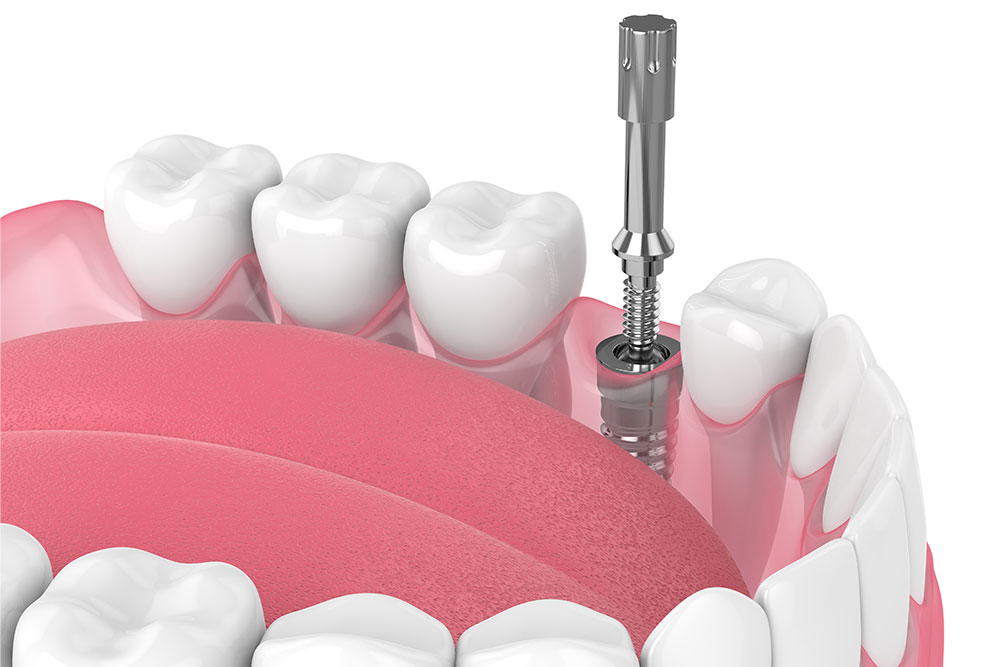
Once the jawbone is ready, the next step is the surgical placement of the dental implant screw, which is essentially a titanium or zirconia post that acts as an artificial tooth root. During this procedure, the implant is carefully inserted into the jawbone at a precise location and angle determined during the planning phase. This screw is the core component of the entire restoration, providing the anchor for the abutment and crown that will eventually be attached. The procedure is typically performed with local anesthesia to ensure the patient is comfortable, and precision is key to setting the stage for proper healing and integration.
Osseointegration: The Healing Process
After the implant screw is placed, the most critical biological process begins: osseointegration. This is the natural process where the jawbone grows around and fuses directly with the surface of the dental implant, creating a strong and stable bond. This healing period can take several months, and its success is fundamental to the implant’s longevity. During this time, the implant is typically left undisturbed beneath the gum line, sometimes with a cover screw to protect it. Rushing this phase can compromise the entire restoration, so allowing adequate time for complete osseointegration is a non-negotiable step for predictable, long-term results.
Attaching the Abutment and Crown
Once osseointegration is complete, the final stages of the restoration can begin. The gum tissue is opened to expose the implant, and a small connector piece called an abutment is attached to the implant screw. The abutment sits at or just above the gum line and serves as the attachment point for the final crown. After taking a final impression, a custom-made crown is fabricated to match the patient’s natural teeth in shape, size, and color. This final piece is then secured to the abutment, completing the patient’s new, functional, and natural-looking tooth. High-quality dental implant restorations are essential for achieving the best aesthetic and functional outcomes.
A Closer Look at Dental Implant Screws
While patients see the final crown, dental professionals know that the unseen components, particularly the screws, are what ensure the restoration’s stability and longevity. Dental implant screws are not one-size-fits-all; they are highly engineered pieces of hardware designed for specific functions, materials, and implant systems. From securing the abutment to fastening a full-arch bridge, each screw plays a distinct role. Understanding the different types, materials, and design features is essential for selecting the right components for each clinical situation, which directly impacts the success and serviceability of the final restoration.
Types of Dental Implant Screws by Function
Dental implant screws are categorized based on their specific job within the implant system. Each type is designed to perform a precise function at different stages of the treatment process, from the initial surgery to the final restoration. Using the correct screw for its intended purpose is fundamental to the mechanical stability of the entire implant assembly. These specialized screws include abutment screws, fixation screws, impression screws, and cover screws, all of which work together to ensure a secure and lasting result.
Abutment Screws
The abutment screw is arguably one of the most critical components in the final restoration. Its primary function is to secure the abutment to the implant body. This connection is what transfers the forces of chewing from the crown, through the abutment, and down to the implant integrated into the jawbone. A properly torqued and compatible abutment screw prevents loosening and ensures the stability of the crown. Given its vital role, the integrity of this screw is paramount for the long-term success of single-tooth replacements and other implant-supported restorations.
Fixation Screws
Fixation screws are used in more complex restorative cases to fasten customized components like CAD/CAM frameworks, bridges, and multi-unit abutments. When you are restoring multiple teeth or a full arch, these screws provide the necessary stability to hold the larger prosthetic structure securely to the implants. They are designed to handle significant occlusal loads distributed across the framework. The precision of these screws is critical, especially in digitally designed cases, to ensure a passive fit of the final restoration, which minimizes stress on the implants and framework.
Impression Screws
Impression screws play a temporary but essential role during the restorative phase. They are used to secure impression copings to the implant during the impression-taking process. This step is crucial for accurately capturing the position, depth, and orientation of the implant in the patient’s mouth. These screws come in different designs for both closed-tray and open-tray impression techniques. An accurate impression is the foundation for a well-fitting final prosthesis, and the impression screw is the key to achieving that accuracy, ensuring the lab has the exact information needed to fabricate the restoration.
Cover Screws
A cover screw is a small, flat-headed screw placed on top of the implant immediately after it is surgically inserted into the jawbone. Its purpose is to protect the implant during the osseointegration or healing phase. By sealing the top of the implant, the cover screw keeps the internal connection point from being infiltrated by gum tissue and debris. It sits flush with the top of the implant, allowing the gum tissue to heal over it in a two-stage surgical approach, keeping the internal threads clean and ready for the abutment to be placed months later.
Screw Materials and Special Coatings
The material composition of a dental implant screw is just as important as its design. The materials must be biocompatible, meaning the body accepts them without adverse reactions, and strong enough to withstand the immense forces of chewing over many years. The choice of material can influence the screw’s strength, longevity, and even its aesthetic properties. Additionally, special surface coatings are often applied to enhance performance, providing benefits like improved resistance to bacteria and wear.
Materials: Titanium vs. Zirconia
The two most common materials used for dental implant components are titanium and zirconia. Titanium is a metal that is exceptionally strong, lightweight, and highly biocompatible, which is why it has been the gold standard in implantology for decades. The human body accepts it well, allowing for successful osseointegration. Zirconia, a type of crystal material, is another excellent biocompatible option that offers superior aesthetics due to its tooth-like color. This makes it a popular choice for abutments in the anterior region where minimizing any potential gray show-through from a metal component is a priority.
Performance-Enhancing Coatings
To further improve the mechanical and biological properties of implant screws, manufacturers often apply special coatings. One common example is a Titanium Nitride (TiN) coating. This gold-colored surface treatment hardens the screw, making it more resistant to wear and stripping. It also provides an antibacterial, highly resistant surface, which can help maintain the health of the surrounding tissues. These advanced coatings are designed to reduce the risk of mechanical complications like screw loosening or fracture, contributing to a more reliable and durable restoration over the long term.
Key Structural and Design Features
Beyond function and material, the specific structural and design features of a dental implant screw are critical for both clinical success and aesthetic outcomes. Innovations in screw design, such as angled screw channels, address complex clinical challenges, while fundamental characteristics like the connection type and size compatibility ensure the mechanical integrity of the entire system. Paying close attention to these details is essential for creating a restoration that is not only strong but also looks natural and is easy to maintain.
Angled Screw Channels for Aesthetics
One of the most significant advancements in implant dentistry is the development of angled screw channels. In traditional restorations, the screw access hole is located on the chewing surface for posterior teeth or the lingual side for anterior teeth. However, when an implant must be placed at an angle, this access hole can end up on the visible, facial surface of the crown. Angled screw channels use specialized screws and drivers that allow the access hole to be relocated to a more discreet position, dramatically improving the final aesthetics, particularly for front teeth.
Implant Connection Types
Dental implants feature various connection types where the abutment attaches, such as internal hex, external hex, or conical connections. Each system has a unique geometric design, and the implant screw must be engineered to perfectly match that specific connection. An incompatible screw will not seat properly, leading to a micro-gap between components. This can cause instability, screw loosening, and potential bacterial leakage, which can compromise both the restoration and the health of the implant. Therefore, matching the screw to the exact implant connection type is a fundamental requirement for a stable fit.
The Importance of Size and Compatibility
Using components that are 100% compatible with the specific implant platform is non-negotiable. Every implant system has its own precise dimensions for screws, including diameter, length, and thread design. Attempting to use a screw from a different system, even if it seems to fit, can lead to serious complications. An improper fit can cause uneven stress distribution, leading to screw loosening or breakage over time. To avoid these issues, it is critical to use only the screws specifically designed and manufactured for the implant system you are working with, ensuring a secure and predictable outcome.
Benefits of Screw-Retained Implant Systems
Screw-retained implant systems have become a preferred choice for many clinicians due to their numerous advantages in both clinical application and long-term management. Unlike cement-retained restorations, which use dental cement to hold the crown in place, screw-retained systems secure the crown directly to the implant or abutment with a tiny screw. This design offers greater control, predictability, and serviceability over the life of the restoration. The benefits range from a high rate of success to simplified maintenance, making it an attractive option for single crowns, bridges, and full-arch prosthetics.
High Success Rate
One of the most compelling reasons to choose dental implants is their outstanding track record of success. Modern dental implant procedures are highly predictable, with studies showing that more than 95% of them are successful. This high success rate is a result of decades of research, advancements in materials science, and refined surgical techniques. When properly planned and executed, and with good patient aftercare, dental implants provide a reliable and durable solution for tooth replacement. This level of predictability gives both clinicians and patients confidence in the treatment outcome.
Simplified Maintenance and Crown Replacement
A key advantage of screw-retained systems is retrievability. Because the crown is attached with a screw, it can be easily removed by the dentist without having to cut or damage the restoration. This is incredibly useful for routine maintenance, such as professional cleaning around the abutment, or if the porcelain on the crown ever chips or needs repair. If the artificial tooth ever needs to be replaced, the process is straightforward. This ease of access simplifies long-term care and makes managing any future complications much more efficient compared to cement-retained crowns.
Potential Risks and Post-Surgery Care
While dental implants have a very high success rate, no surgical procedure is entirely without risk. It’s important for clinicians to be aware of potential complications and to effectively communicate them to patients. Equally important is providing clear guidance on post-surgery care, as the patient’s diligence in following aftercare instructions plays a significant role in the healing process and the long-term health of the implant. A well-informed patient is better equipped to identify potential issues early and maintain their new restoration for years to come.
Understanding Potential Complications
Although uncommon, potential complications can arise during or after the implant procedure. These can include infections at the implant site, which can often be managed with antibiotics if caught early. In some cases, the implant might not fuse properly with the jawbone, a complication known as implant failure. Other risks include potential nerve damage or sinus issues, particularly with implants in the upper jaw. Thorough pre-operative planning, including detailed imaging, helps to minimize these risks, but it’s essential to monitor patients closely during the healing phase to address any issues that may develop.
Guiding Patients on Aftercare
Patient education on aftercare is crucial for the long-term success of a dental implant. Emphasize the importance of maintaining excellent oral hygiene to prevent infection and ensure the health of the surrounding gum tissue. Patients should be instructed to keep up with good brushing, flossing (using implant-specific techniques), and attending regular dental cleanings. Advising them to avoid hard or sticky foods in the initial healing period can also prevent undue stress on the new implant. Clear, actionable instructions empower patients to take an active role in caring for their investment and ensuring its longevity.
Get the Perfect Fit with Custom Abutments & Crowns
 Custom-designed abutments and crowns fabricated through CAD/CAM technology provide exceptional precision and consistency for implant-supported restorations. These abutments are milled from high-quality materials such as zirconia, titanium, PMMA, base metal, composite resins, and high-performance polymers to match individual patient anatomy. CAD/CAM customization improves emergence profiles, supports healthy soft tissue adaptation, and enhances overall aesthetics. These restorations are compatible with both screw-retained and cement-retained systems, giving clinicians flexibility in treatment planning. Compared to stock abutments, custom CAD/CAM solutions reduce chairside adjustments, lower mechanical complications, and deliver more predictable long-term outcomes. The durability of these components reduces the risk of mechanical failure, ensuring a secure foundation for restorations. Dentists benefit from improved accuracy and customisation, allowing them to match each abutment to the patient’s unique anatomy. Compared to stock options, custom abutments provide a more predictable outcome and enhance patient comfort.
PFM Restorations: Strength You Can Count On
PFM restorations remain a reliable option for implant-supported crowns due to their strength and versatility. The metal substructure provides excellent load-bearing support, while the porcelain exterior is customized to match natural tooth color and shape. These restorations are well-suited for posterior and high-load areas where durability is essential. When paired with appropriate implant screw systems, PFM crowns offer dependable retention and long-term performance in demanding clinical conditions.
Hybrid Zirconia: A Modern Solution for Bridges & Dentures
Hybrid zirconia bridges and dentures provide superior strength, aesthetics, and longevity for full-arch implant restorations. Made from 100% zirconia, these screw-retained prostheses resist fractures and wear while maintaining natural translucency. The rigid structure ensures optimal screw retention and stability, making zirconia an excellent choice for patients seeking a long-term, low-maintenance solution. Compared to acrylic alternatives, zirconia restorations offer improved durability and premium aesthetic outcomes.
When to Recommend Hybrid Acrylic Dentures
Hybrid acrylic dentures offer an affordable and functional solution for implant-supported full-arch restorations. These screw-retained prostheses feature an acrylic base that replicates natural gum tissue while maintaining stability through implant attachment. Their lightweight design allows for easier adjustments and repairs, making them a practical option for patients prioritizing cost efficiency without sacrificing functionality or aesthetics.
Your Partner in Crafting Perfect Smiles
Get the best results with dental implant specialists in Michigan at Next Dental Lab. We craft high-quality restorations using advanced technology to create precise, durable implants that enhance function and aesthetics. Our team delivers seamless solutions that restore confidence with lasting results. As dental restoration experts, we design crowns, bridges, dentures, and custom prosthetics with exceptional fit and finish. Every restoration meets the highest standards to improve patient comfort and satisfaction. At Next Dental Lab, we make advanced dentistry more accessible with top-tier restorations at competitive prices. Let’s create smiles that last—partner with us today.
Frequently Asked Questions
What are dental implant screws used for?
Dental implant screws are used to secure restorations such as crowns, bridges, and dentures to dental implants. They provide stability, proper retention, and even distribution of biting forces, helping ensure long-term implant success.
What is the difference between screw-retained and cement-retained restorations?
Screw-retained restorations are attached using a screw, making them easier to remove for maintenance or repairs. Cement-retained restorations are bonded in place and may offer improved aesthetics in certain cases, but they are more difficult to retrieve once placed.
Which implant screw type is best for full-arch restorations?
Screw-retained systems are generally preferred for full-arch restorations because they offer durability, retrievability, and easier long-term maintenance. Materials such as zirconia or hybrid restorations are commonly used due to their strength and longevity.
Key Takeaways
- Select the right screw for the right job: Each implant screw has a specific function, from protecting the implant during healing to securing the final crown. Using advanced options like angled screw channels can solve complex aesthetic challenges, preserving the crown’s facial surface for a more natural look.
- Ensure component compatibility to prevent failure: While material choice impacts strength and aesthetics, nothing is more critical than using screws designed for the specific implant system. Mismatched components can lead to instability and mechanical complications, so always verify compatibility for a secure fit.
- Choose screw-retained systems for easier maintenance: The ability to retrieve a screw-retained crown is a significant clinical advantage. This design simplifies future repairs, professional cleanings, and adjustments, making long-term management more efficient for both you and your patient.