On the surface, the Medit i500 and i700 are both sleek, powerful tools for capturing digital impressions. But the real story is in the details. The differences in their performance, design, and user experience can have a significant impact on your day-to-day clinical work. From frames-per-second and scanning area to weight and cable management, every feature matters. While the Medit i700 price is a key consideration, a true comparison goes deeper. This article provides a side-by-side analysis of the specifications that count, helping you understand the technology so you can make an informed investment in your practice’s future.
When choosing the right digital scanner for your dental practice, comparing the Medit i500 vs. i700 is crucial in determining the best investment. Both scanners offer cutting-edge technology, precision, and ease of use, but they cater to slightly different needs and budgets. This article will provide a comprehensive comparison to help you make an informed decision.
Medit i500 vs. i700: What’s the Difference?
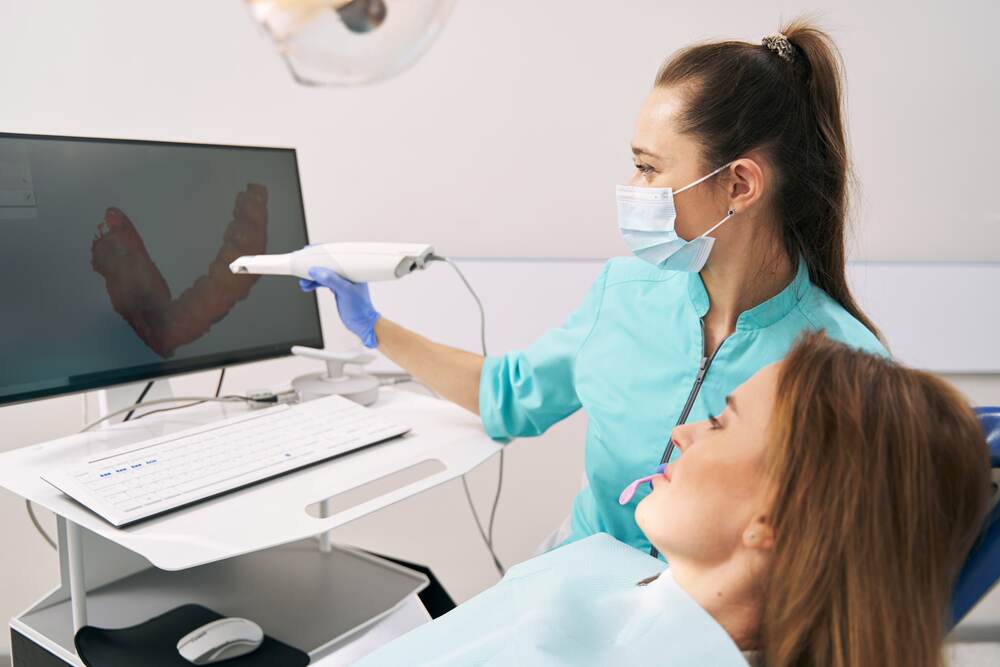 The Medit i500 and i700 are both advanced intraoral scanners designed to streamline the process of capturing digital impressions in dentistry. These scanners are especially useful in procedures involving dental implants, restorative work, and creating custom-fit appliances like night guards. Each model has unique strengths, and the right choice depends on your practice’s specific needs and goals.
A Closer Look at the Medit i500
The Medit i500 is known for its affordability while still bringing high performance and accurate digital impressions. It is a great entry-level option for dental professionals looking to integrate digital scanning technology without a significant financial commitment.
- Cost-Effective: The i500 has impressive value for money, making it ideal for practices that want to keep costs down while benefiting from a reliable scanner.
- Lightweight Design: Weighing only 280 grams, the i500 is easy to maneuver, reducing operator fatigue during longer procedures.
- Accurate Scanning: With a resolution of 2.0 megapixels and video capture at 30 frames per second, the i500 guarantees precise and fast digital impressions, which is crucial for fitting crowns, bridges, and dental implants.
- No Additional Fees: Medit’s open-system platform means no subscription or data management fees, adding to its cost-effectiveness.
Release Date and Market Position
Released in late 2018, the i500 established Medit as a major player in the intraoral scanner market.
The i500’s arrival was a game-changer for many dental practices. It quickly earned a reputation for delivering accurate, high-quality digital impressions without the significant investment typically required for this level of technology. This made it an ideal entry point for dentists wanting to adopt a digital workflow but were cautious about the initial outlay. The i500 proved that reliable performance and excellent results were accessible, making the transition to digital dentistry much smoother. It’s a solid choice for any practice looking to streamline processes for crowns, bridges, and implants while being mindful of their budget.
What Makes the Medit i700 Stand Out?
The Medit i700 is the premium option of the two, having enhanced features, faster processing times, and greater accuracy. It is well-suited for busy dental practices that require speed and high precision.
- Improved Speed: The i700 is approximately 30% faster than the i500, making it ideal for high-volume practices that need to maximize efficiency.
- Better Image Quality: With a resolution of 2.3 megapixels and advanced image processing algorithms, the i700 captures even finer details, which is particularly beneficial for complex cases involving dental implants or full-mouth restorations.
- Ergonomic Design: Weighing just 245 grams, the i700 is lighter than the i500, enhancing user comfort and reducing strain during extended use.
- AI-Powered Scanning: The i700 uses artificial intelligence to automatically remove unnecessary soft tissue data, improving the clarity of scans and making procedures more efficient.
Release Date and Technological Advancements
Launched in April 2021, the i700 represents a significant technological leap forward from its predecessor.
The Medit i700 is designed to improve the efficiency and accuracy of digital impressions in your practice. It’s approximately 30% faster than the i500, making it a fantastic choice for high-volume offices that need to keep appointments running smoothly. This speed doesn’t compromise quality; the i700 boasts improved image resolution and advanced processing algorithms to capture finer details. This is particularly beneficial for complex cases requiring precise dental implants or full-mouth restorations. Plus, the integration of artificial intelligence automatically removes unnecessary soft tissue data, which enhances the clarity of your scans and streamlines the entire procedure. This level of detail makes it easier for labs to produce exceptional results when you connect your scanner for digital case submission.
Which is Faster? Comparing i500 and i700 Performance
When comparing the Medit i500 vs. i700, speed and accuracy are the key differentiating factors. The i700 excels in speed, making it the preferred choice for larger practices that handle many patients daily. On the other hand, the i500, while slightly slower, still offers impressive accuracy at a more budget-friendly price point. For practices focusing on complex restorative procedures, including dental implants, the i700’s higher resolution and faster scanning capabilities can show an advantage. However, for smaller practices or those just beginning to adopt digital scanning, the i500 brings excellent performance without the added cost.### Performance and Speed When you’re evaluating intraoral scanners, performance is everything. The speed and accuracy of your device directly impact chair time, patient comfort, and the quality of the final restoration. While both the i500 and i700 are high-performing scanners, the i700 was engineered with significant upgrades that make a noticeable difference in a busy practice. It’s not just about capturing an image; it’s about how quickly and clearly you can capture the complete data set needed for precise fabrication, whether for a single crown or a full-arch restoration. #### Scan Speed in Frames Per Second (FPS) The most significant performance leap from the i500 to the i700 is the scan speed. The Medit i700 captures data at up to 70 frames per second (FPS), which is more than double the i500’s speed of up to 30 FPS. This faster capture rate means you can complete a full-arch scan much more quickly, reducing patient discomfort and freeing up valuable chair time. For practices that handle a high volume of restorative cases, this efficiency gain is a major advantage, allowing you to see more patients without compromising the quality of your digital impressions. #### Accuracy and Scanning Area Beyond speed, the i700 offers superior detail and a wider field of view. It features a 7% larger scanning area, allowing you to capture more of the dental anatomy with each pass. This, combined with its higher resolution of 2.3 megapixels compared to the i500’s 2.0 megapixels, means the i700 can capture finer details with greater precision. This level of accuracy is critical for complex cases, ensuring that restorations like crowns and bridges have perfectly sealed margins and that implant abutments fit flawlessly. ### Design and Ergonomics The physical design of a scanner plays a huge role in its day-to-day usability. A tool that feels like an extension of your hand makes the scanning process smoother and less physically demanding. Medit clearly focused on user comfort when developing the i700, refining the design to be smaller, lighter, and more streamlined than its predecessor. These ergonomic improvements contribute to a better clinical experience for both the practitioner and the patient, making long or difficult scanning sessions much more manageable. #### Weight and Size The difference in handling between the two scanners is immediately apparent. The Medit i700 is 25% smaller and 12% lighter than the i500, weighing in at just 245 grams. This reduction in size and weight significantly reduces hand and wrist fatigue, especially during full-mouth scans. The lighter, more compact form factor also improves maneuverability, making it easier to access hard-to-reach areas like the distal surfaces of second molars and ensuring a more comfortable experience for patients with a limited opening. #### Cabling and Connectivity Workspace clutter can be a constant battle in any operatory. The i700 addresses this with a simplified connection system. It connects directly to a computer with a single, detachable USB-C cable, eliminating the need for the separate power box and extra cables required by the i500. This not only creates a tidier and more organized workspace but also makes the scanner more portable between operatories. The detachable cable is also a practical feature, as it can be easily replaced if damaged without needing to service the entire unit. #### User Experience Features The Medit i700 introduces several thoughtful features that enhance the overall workflow. One of the most notable is the addition of a remote control button on the scanner itself. This allows you to check scan data and switch between scan stages without having to turn back to your computer or touch the mouse. It’s a small but powerful addition that keeps your focus on the patient and the scanning process, creating a more fluid and uninterrupted experience from start to finish. ### Scanner Tip Technology The scanner tips are a critical component that directly impacts both hygiene and operational workflow. The i700 features redesigned tips that are not only reversible but also more durable. A key improvement is their longevity; the i700’s tips can be autoclaved up to 150 times, a significant increase from the 50-cycle limit of the i500’s tips. This extended lifespan means you’ll replace them less frequently, which simplifies inventory management and contributes to a lower long-term cost of ownership. This durability ensures your scanner is always ready for the next patient without compromising on sterilization standards.
Software and Workflow Integration
A scanner is only as good as the software that powers it. Medit scanners operate on the Medit Link platform, an open ecosystem designed to be intuitive and collaborative. This software is the hub for managing cases, from scanning and analysis to communicating with your dental lab. The platform’s open architecture is a major advantage, as it doesn’t lock you into a specific system. Instead, it provides the flexibility to work with your preferred partners and design software, ensuring the scanner can adapt to your practice’s unique workflow rather than forcing you to adapt to it.
The Medit Link Ecosystem
The Medit Link software is widely praised for being user-friendly, powerful, and, importantly, free from any recurring subscription fees. It provides a comprehensive suite of tools that allow you to manage patient cases, analyze scan data, and communicate seamlessly with labs. The software is consistently updated with new features and improvements, ensuring that your scanner’s capabilities continue to grow over time. This commitment to software development without extra charges adds significant long-term value to the initial hardware investment and makes digital dentistry more accessible for practices of all sizes.
Open Architecture and File Exports
One of the most powerful features of Medit scanners is their open architecture. They generate scans in common digital file formats, including STL, OBJ, and PLY. These universal formats are compatible with virtually any third-party design software or lab workflow, giving you complete freedom to choose the best partners for your practice. You are never locked into a proprietary system, which means you can easily send cases to any lab that accepts digital files. This flexibility is essential for maintaining control over your restorative processes and ensuring you can always work with your preferred specialists.
As a lab that champions digital dentistry, Next Dental Lab seamlessly integrates with the open file formats (.STL, .OBJ, .PLY) from Medit scanners, making it easy to submit your digital cases for restorations like crowns, bridges, and implants.
This open system simplifies the entire restorative process. Once you’ve captured a scan with your Medit i500 or i700, you can export the file and upload it directly to our portal. Because we are built for digital, our team can immediately begin designing your patient’s restoration, whether it’s a single zirconia crown or a complex hybrid denture. This direct digital workflow eliminates the inaccuracies and delays associated with physical impressions, leading to better-fitting restorations and faster turnaround times. You can easily connect your scanner to our system and start sending cases the same day.
Compatibility and Limitations
While Medit scanners are designed for broad compatibility, it’s crucial to ensure your clinic’s hardware is up to the task. Both the i500 and i700 require a powerful computer with a dedicated graphics card to process the large amounts of data they capture. Before investing, always check Medit’s recommended PC specifications to avoid performance bottlenecks that could slow down your workflow. Additionally, while the open system is a major benefit, it’s always a good idea to confirm compatibility and preferred file formats with your lab partners to ensure the smoothest possible collaboration on every case.
Analyzing the Financial Commitment
Making the switch to digital scanning is a significant investment for any dental practice. It’s a decision that involves more than just the initial outlay for the scanner itself; it also includes considerations for hardware, training, and long-term operational value. Understanding the complete financial picture helps you choose a scanner that not only fits your current budget but also delivers a strong return by improving efficiency, reducing material requirements, and enhancing the quality of patient care over time.
Scanner Acquisition and CPO Options
The initial acquisition of the scanner is the largest part of the investment. While new units are available through official distributors, Certified Pre-Owned (CPO) options can offer excellent value. You might find a CPO Medit i700 package that includes the scanner, a compatible laptop, software, and staff training for a more accessible entry point. These packages often come with a warranty, providing peace of mind and making the transition to digital dentistry more manageable for practices looking to optimize their budget without sacrificing performance.
Essential Hardware and Accessories
To get the most out of your Medit scanner, you need a computer that can handle the demanding graphical and processing requirements. This often means investing in a new, high-specification laptop or desktop PC, which should be factored into the overall financial plan. Other accessories, such as extra scanner tips and any necessary calibration tools, are also part of the equation. Ensuring you have the right supporting hardware from the start is key to a smooth and efficient scanning experience and prevents frustrating lags or software crashes.
Long-Term Value and Warranty
The true value of an intraoral scanner is realized over the long term. By eliminating the need for traditional impression materials, you can significantly reduce your overhead on consumables. Furthermore, the efficiency gains from a faster, more accurate workflow can lead to increased patient throughput and higher case acceptance. Medit scanners come with solid warranties and access to extensive training resources, which protect your investment and help your team become proficient quickly. This combination of reduced operational needs and improved productivity makes the scanner a valuable asset for any modern dental practice.
Considering the Broader Medit Family
While the i500 and i700 are two of Medit’s most popular scanners, the company offers a range of options to suit different clinical needs and budgets. Understanding where these other models fit can provide a clearer picture of the Medit ecosystem and help you make the most informed decision. Whether you’re looking for an affordable entry point or the ultimate in cable-free convenience, there’s likely a Medit scanner that aligns perfectly with your practice’s goals.
The Medit i600: A Successor to the i500
Medit introduced the i600 as the modern, affordable successor to the i500. It bridges the gap between the entry-level i500 and the premium i700, offering improved performance and ergonomics over the i500 but at a more accessible point than the i700. The i600 is a wired scanner that provides a great balance of speed, accuracy, and value, making it an excellent choice for practices that want the latest technology without committing to the top-of-the-line model. It effectively serves as the new standard for an entry-level Medit scanner.
The Medit i700 Wireless: Cable-Free Scanning
For practices seeking the ultimate in flexibility and freedom of movement, the Medit i700 Wireless is the premier option. It delivers the same high-speed performance and accuracy as the wired i700 but completely untethers the user from the computer. This cable-free design can make scanning much easier, especially when working with children, anxious patients, or in operatories with limited space. The freedom from cables allows for effortless maneuverability around the patient’s chair, creating a smoother and more ergonomic scanning experience for the clinician.
Will Medit Scanners Work With Your Current Setup?
The i500 and i700 use Medit’s open-system platform, allowing dentists to export scans in various formats compatible with various design and milling systems. This flexibility is invaluable for practices looking to expand their offerings in areas like crowns, bridges, and digital scanners for orthodontics. Next Dental Lab knows how important investing in the right technology to deliver the best possible care for your patients is. The Medit i500 and i700 are excellent digital scanners that can significantly enhance your practice’s efficiency and precision. If you’re looking for a budget-friendly option without sacrificing quality, the i500 is an excellent choice. Contact us today.
Seamless Integration with Your Dental Lab
One of the standout features of both the i500 and i700 is Medit’s open-system platform. This means you aren’t tied to a specific workflow and can export scans in universal file formats. This flexibility is a game-changer, especially if you’re expanding your services to include complex restorations like custom crowns and bridges or full-arch hybrid dentures. At Next Dental Lab, we champion this digital-forward approach because it simplifies collaboration. We know that investing in the right technology is a huge step toward providing the best patient care. That’s why our team is fully equipped to work with your digital scans, ensuring a smooth process from the moment you connect your scanner to our lab. Whether you choose the i500 or the high-performance i700, we’re ready to handle your cases with precision and expertise.
Frequently Asked Questions
I’m just starting with digital dentistry. Is the i700 worth the extra investment over the i500? Think of it this way: the i500 is a fantastic and reliable entry point into digital scanning. It delivers accurate impressions and will absolutely transform your workflow from traditional methods. The i700 is the choice for a practice that plans to scale quickly or already has a high volume of restorative cases. Its speed and enhanced detail capture become more valuable when you’re trying to optimize every minute of chair time.
How much of a difference does the i700’s faster scan speed make in a typical appointment? The difference is quite noticeable, especially during full-arch scans. The i700 captures more than double the data per second, which can shave minutes off the scanning process. This means less time with the scanner in the patient’s mouth, which improves their comfort, and it allows you to move through appointments more efficiently. For a single crown, the time savings are smaller, but for larger cases, the speed is a significant advantage.
What does an “open system” mean for my day-to-day work with a lab like Next Dental Lab? An open system gives you complete freedom. It means your scanner produces files in universal formats, like STL, that any modern lab can use. You aren’t locked into a specific manufacturer’s ecosystem. For your daily work, this simplifies everything. You can capture a scan, export the file, and send it directly to us without worrying about compatibility issues. It ensures you can always choose the lab partner that best fits your needs for quality and service.
Besides being lighter, are there other design features that make the i700 easier to use? Yes, the user experience improvements on the i700 are very practical. The remote control button on the scanner itself is a great example. It lets you manage the scanning software without having to reach for your mouse or turn away from the patient. The single-cable connection also makes a big difference by reducing clutter around the chair and making it easier to move the scanner between operatories.
Will I need to buy a new computer to run either of these scanners effectively? It’s very likely you will need a computer with specific capabilities. Both scanners, especially the i700, process a huge amount of visual data in real time, which requires a powerful processor and a dedicated graphics card. Using a standard office computer will almost certainly lead to lag and slow performance. Before you commit, it’s best to review Medit’s recommended PC specifications and factor a potential computer upgrade into your budget.
Key Takeaways
- Match the scanner to your practice’s pace: The Medit i700 is built for speed and high-volume work, making it a great fit for busy offices handling complex cases, while the i500 offers excellent accuracy and value as a reliable entry point for practices adopting digital workflows.
- Prioritize comfort and workflow efficiency: The i700’s lighter, smaller design and single-cable connection are significant upgrades that reduce user fatigue and streamline the scanning process, making a noticeable difference in day-to-day clinical use.
- Embrace the freedom of an open system: Both scanners operate on a subscription-free platform, allowing you to export universal file formats. This flexibility ensures you can collaborate seamlessly with any digital-ready lab without being tied to a specific ecosystem.