Your patients come to you for solutions that will change their lives, and a full-arch restoration is a monumental step. When they ask about their options, the conversation inevitably turns to the hybrid denture vs all-on-4 comparison. Explaining the differences in a way that is both accurate and easy to understand is crucial for building trust and setting realistic expectations. This article is designed to be your resource for that conversation. We’ll explore the key talking points, from the “teeth-in-a-day” advantage to the long-term maintenance of each prosthetic, so you can clearly articulate the pros and cons and help your patients feel empowered in their treatment journey.
Patient needs differ, and so do dental restoration solutions. Two highly discussed options are the hybrid denture vs. all-on-4 method. This discussion revolves around functionality, aesthetics, and patient comfort, all of which are key considerations in treatment planning. At Next Dental Lab, we’ve made our mark with high-quality, affordable dental products, including hybrid dentures. Recognized for their blending of aesthetics and function, hybrid dentures are a go-to for full-arch restorations. Our skilled team tailors these dentures to patient needs, ensuring optimal comfort and ease. While hybrid dentures offer an array of advantages, we also recommend the all-on-4 method for certain cases. Our products always match all-on-4 specifications, providing dentists with top-quality dental products while keeping patient affordability at the forefront.
Understanding the Core Difference: Technique vs. Prosthetic
When discussing full-arch restorations, the terms “All-on-4” and “hybrid denture” are often used together, which can create some confusion. The simplest way to distinguish them is to think of one as the method and the other as the result. All-on-4 is a specific surgical technique for placing implants, while a hybrid denture is the actual prosthetic that attaches to those implants. Understanding this core difference is the first step in determining the best treatment path for your patients. While the All-on-4 technique is a popular and effective protocol, it’s just one of several ways to support a full-arch restoration like the high-quality hybrid dentures we fabricate at Next Dental Lab. The choice of surgical technique ultimately depends on the patient’s unique anatomy and clinical needs.
All-on-4 as a Surgical Technique
Think of All-on-4 as a specific, trademarked treatment protocol. It’s a surgical approach for placing a full arch of teeth using just four dental implants. As one source puts it, “All-on-4 is a special way to place dental implants, using four implants to hold a full set of teeth.” The two posterior implants are characteristically placed at an angle to maximize contact with existing bone, often avoiding the need for bone grafting. This technique provides a stable foundation for a prosthetic, and very often, the prosthetic of choice is a hybrid denture supported by those dental implants. The technique itself is the blueprint for the surgery, not the final restoration.
Hybrid Dentures as a Type of Prosthetic
A hybrid denture, on the other hand, is the physical restoration your patient receives. It’s a fixed, full-arch prosthesis that combines the stability of dental implants with the aesthetics of a complete denture. These restorations are screw-retained, meaning they are not removable by the patient, offering a more secure and natural-feeling solution than traditional removable dentures. As NuSet Dental Implants and Oral Surgery explains, “Hybrid dentures are a type of fake teeth (restoration) that are fixed onto implants.” At Next Dental Lab, we craft these prosthetics from durable, lifelike materials to ensure they not only function perfectly but also give your patients a confident, beautiful smile.
Surgical and Structural Distinctions
Beyond the basic definition, the differences between a standard hybrid denture case and one using the All-on-4 protocol extend to the surgical and structural details. These distinctions are critical in the treatment planning phase, as they directly impact the surgical complexity, timeline, and patient candidacy. Key factors include the number and placement of the implants and whether bone augmentation is necessary. These elements are not just technical details; they shape the entire treatment experience for both the clinician and the patient, influencing everything from surgical time to the final restorative outcome. Making an informed decision requires a clear understanding of how these approaches differ at the foundational level.
Number and Placement of Implants
The most obvious structural difference lies in the number of implants used. The All-on-4 protocol, by its very name, uses exactly four implants to support the entire arch. In contrast, a conventional hybrid denture treatment plan is more flexible. According to one surgical center, “Hybrid dentures usually need 4 to 6 implants. All-on-4 implants use 4 implants.” This flexibility allows clinicians to place additional implants where needed to achieve greater stability or to work around anatomical limitations, providing a more customized foundation based on the patient’s specific bone density and jaw structure. The decision between four, five, or six implants is a crucial part of tailoring the treatment for long-term success.
The Role of Bone Grafting
One of the most significant advantages of the All-on-4 technique is its ability to often bypass the need for bone grafting. By angling the posterior implants, the protocol maximizes the use of available anterior bone, which is typically denser and less prone to resorption. As a Sonoma County Dentist notes, “All-on-4 implants often don’t need bone grafting, which can save time and money.” This can be a game-changer for patients with moderate bone loss who might otherwise require extensive and lengthy grafting procedures before they could be considered candidates for implants. Eliminating this step simplifies the process and shortens the overall treatment timeline considerably.
The Treatment Process and Timeline
The patient’s journey from consultation to their final, beautiful smile varies depending on the chosen approach. The treatment timeline is influenced by factors like the need for extractions, the patient’s healing capacity, and the specific surgical protocol being followed. While both paths lead to a full-arch restoration, the steps involved can differ significantly, particularly concerning the immediacy of the restoration. From initial digital scans to the placement of the final prosthetic, each phase is carefully planned to ensure a predictable and successful outcome. As a lab partner, we at Next Dental Lab work closely with your practice to ensure the prosthetic phase aligns perfectly with your clinical timeline, whether you’re providing an immediate temporary or planning for the final restoration.
Initial Consultation and Digital Planning
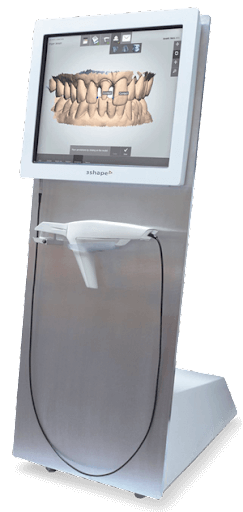
Every successful full-arch case begins with meticulous planning. The initial phase is all about data collection and creating a precise digital blueprint for the surgery and restoration. As one clinic describes the process, “It starts with a check-up, X-rays, and 3D scans to plan everything.” This digital workflow allows for a virtual mock-up of the final outcome, ensuring that both the clinician and the patient are aligned on the aesthetic and functional goals. At Next Dental Lab, we thrive in this digital space. You can easily connect your scanner and send us your digital impressions, allowing our technicians to begin designing a custom hybrid denture that fits your surgical plan perfectly.
The “Teeth in a Day” Advantage
A major draw of the All-on-4 protocol is the potential for immediate loading, often marketed to patients as “teeth in a day.” This concept is a powerful motivator for patients who are anxious about being without teeth. The protocol’s design often provides enough primary stability to support a temporary, fixed prosthetic on the same day the implants are placed. This means “you can often get new teeth on the same day the implants are placed.” While this initial set of teeth is temporary, it provides immediate function and aesthetics, dramatically improving the patient’s quality of life while the implants integrate with the bone.
Healing Time for Final Restoration
Regardless of the surgical technique, dental implants require time to heal and fuse with the jawbone—a process known as osseointegration. This biological process is essential for the long-term stability of the restoration. While an immediate temporary can be placed, the final, permanent hybrid denture is delivered later. For most hybrid denture cases, “the new teeth are attached after the implants have healed and become part of your bone (which takes a few months).” This healing period allows the gums to mature and ensures the final prosthetic has a precise, comfortable, and stable fit. Once osseointegration is complete, you’ll take final impressions for the creation of the definitive hybrid denture.
Which is Stronger: Hybrid Dentures or All-on-4?
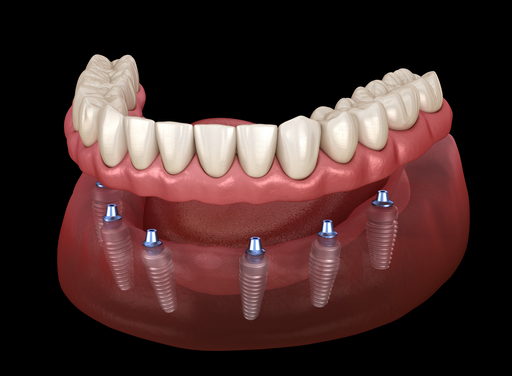 Hybrid dentures and All-on-4 are structurally different prosthetics, influencing their material strength. Hybrid dentures usually feature a plastic or nylon base with plastic teeth, giving them flexibility but making them less robust than a porcelain or titanium all-on-4 structure. All-on-4 uses four titanium implants supporting a full bridge of artificial teeth, often made from porcelain or resin. This design grants All-on-4 superior rigidity while showcasing a high degree of realism, making it a preferred choice for patients demanding a sturdy, resilient solution that stands closer to their natural teeth.
Internal Framework and Material Composition
The internal framework and materials are where these two options really show their differences. A classic hybrid denture is constructed around a custom-milled titanium bar, which creates a rigid skeleton connecting the dental implants. This bar is then layered with high-impact acrylic and set with premium denture teeth. The major advantage of this layered design is its repairability. If a tooth chips or the acrylic wears down, you can often repair the section without having to remake the entire prosthetic. On the other hand, the prosthetic for an All-on-4 treatment is frequently a monolithic restoration, such as a full-contour zirconia bridge. Milled from a single, solid block of zirconia, this type of restoration is exceptionally durable and resistant to staining and wear, offering a robust, long-term solution with beautiful esthetics.
Which Option Looks More Natural?
Hybrid dentures offer reasonable aesthetics, designed to resemble natural gum and teeth. Their color and shape bring convincing realism to the mouth, improving the confidence of wearers. On the flip side, All-on-4 punches above weight on visual appeal. It delivers superior aesthetics with more translucency, depth of color, and light reflection, similar to real teeth. High-quality materials blend better with the rest of the mouth. Patients looking for aesthetics over economic concerns lean toward All-on-4.
Patient Experience and Functional Benefits
Beyond the structural differences, the choice between a hybrid denture and an All-on-4 system often comes down to the patient’s daily experience. Both options offer significant upgrades over traditional dentures, directly impacting comfort, confidence, and long-term oral health. When discussing treatment plans, focusing on these functional benefits helps patients understand the real-world value of their investment. The goal is to restore not just a smile, but also the simple joys of eating, speaking, and feeling confident. Both implant-supported solutions excel in this area, but they achieve it in slightly different ways that can be tailored to individual patient needs and expectations.
At Next Dental Lab, we craft restorations that support these life-changing outcomes. Whether you’re planning a case with hybrid dentures or an All-on-4 protocol, our team ensures the final prosthetic delivers on the promise of improved function and aesthetics. We understand that the ultimate measure of a successful restoration is a happy patient who can forget they even have a prosthetic. By providing high-quality, precisely fitted dental products, we help you deliver that seamless experience, ensuring your patients can fully embrace the functional advantages of modern implant dentistry.
Comfort and Restored Taste
A major advantage of implant-supported restorations is the dramatic improvement in comfort. Unlike traditional dentures that can slip or rub, hybrid dentures are securely anchored to dental implants in the jawbone. This stability eliminates movement, giving patients the confidence to eat and speak without worry. Furthermore, because these prosthetics don’t need to cover the roof of the mouth for suction, patients experience a more natural feeling and can taste their food more fully. This open-palate design is a significant quality-of-life enhancement that helps patients enjoy meals and feel more comfortable throughout the day.
Stimulating the Jaw to Prevent Bone Loss
One of the most critical long-term benefits of both hybrid dentures and All-on-4 implants is their ability to preserve jawbone health. After tooth loss, the jawbone naturally begins to shrink or resorb due to a lack of stimulation. Both of these treatment options involve placing implants directly into the bone, which mimics the function of natural tooth roots. This provides the necessary stimulation to halt bone loss and maintain the patient’s facial structure. By providing a strong foundation for the new teeth, these implants are essential for preserving the integrity of the jaw for years to come.
How Long Do Hybrid Dentures and All-on-4 Last?
Both hybrid dentures and All-on-4 have good durability, but they stand apart in their toughness. Hybrid dentures are less hardy than All-on-4 and more prone to wear and damage like chipping or staining. Contrarily, All-on-4 boasts of greater toughness and resiliency against wear and tear. Its structure, coupled with the strength of porcelain or resin teeth, withstands the daily stresses of biting and chewing, making it a preferred choice for patients seeking a long-lasting, robust dental solution.
Expected Lifespan of the Prosthesis
When you’re discussing long-term outcomes with a patient, the expected lifespan of their restoration is a critical piece of the puzzle. Hybrid dentures typically have a service life of about five to eight years before a replacement is needed. Over time, daily function can cause wear, such as chipping or staining on the prosthetic. On the other hand, All-on-4 implants are built for the long haul. With diligent care from the patient, they can last for 10 to 15 years, and often much longer. The key difference lies in the All-on-4’s robust construction; it uses a full bridge made from durable materials like porcelain or resin, all anchored by four titanium implants. This design provides a more permanent and resilient dental solution for patients seeking a lasting restoration.
How to Care for Your New Dental Restoration
Maintenance needs and hygiene factors are similar between the two prosthetics. Both require regular cleaning with a soft brush, non-abrasive toothpaste, and regular flossing to prevent gum disease and ensure longevity. Hybrid dentures demand more vigilance in daily care due to their less robust material construct. All-on-4 prosthetics are comparatively less maintenance-heavy but need careful cleaning around the implant sites to avoid plaque accumulation and potential infections.
Addressing Food Trapping
A common patient concern with any full-arch restoration is the potential for food trapping. Both hybrid dentures and All-on-4 prosthetics are designed to create a seal with the gum line to minimize this. However, the fit and design play a significant role. Over a long period, typically 10 to 15 years, hybrid dentures can be more prone to wear, such as chipping or staining, which could affect the precision of the fit over time. This makes diligent oral hygiene and regular dental check-ups essential to ensure the prosthetic remains snug and clean, preventing food particles from accumulating underneath and causing irritation or inflammation.
Professional Removal and Cleaning
The maintenance approach for these two options highlights a key philosophical difference. Hybrid dentures are designed to be retrievable. While they are fixed for the patient’s daily use, a dentist can remove them for professional cleaning, maintenance, or repairs. This accessibility can be an advantage for thorough hygiene appointments. In contrast, many All-on-4 systems are designed for more permanent placement and are not intended for routine removal. This offers a greater sense of permanence for the patient but requires meticulous home care and specialized cleaning techniques to maintain the health of the underlying implants and gum tissue.
Determining Patient Candidacy
Selecting the right full-arch solution begins with a thorough evaluation of the patient’s unique clinical situation and personal goals. It’s not just about replacing teeth; it’s about restoring function, confidence, and quality of life. The decision between a hybrid denture and the All-on-4 method hinges on several critical factors, including the patient’s jawbone density, overall health, and their expectations for the treatment timeline and final outcome. A comprehensive assessment, including advanced imaging, is the foundation for developing a treatment plan that aligns with the patient’s anatomical realities and desired results. Guiding your patient through these considerations helps ensure they feel confident and informed about their restorative journey.
Who Benefits Most from the All-on-4 Method?
The All-on-4 technique is often an excellent choice for patients with significant bone loss in the posterior jaw. By placing the posterior implants at an angle, this method can often bypass the need for extensive bone grafting procedures, which shortens the overall treatment time. This makes it particularly appealing for patients who have lower jawbone density and want to avoid bone grafting. Furthermore, the All-on-4 protocol is well-known for its ability to deliver immediate “teeth-in-a-day” results, where a temporary fixed prosthesis is placed on the same day as the surgery. This immediate restoration of function and aesthetics is a powerful motivator for many patients.
When to Consider a Hybrid Denture with More Implants
A hybrid denture may be the preferred option for patients who have adequate bone structure to support a few additional implants. Typically utilizing four to six implants, hybrid dentures combine the stability of dental implants with the full-arch coverage of a traditional denture. This approach provides outstanding stability for chewing and speaking while restoring facial volume. At Next Dental Lab, we craft custom hybrid dentures that offer a beautiful, natural-looking result, giving patients a secure and comfortable solution. This option is ideal for those seeking a balance of robust function and proven aesthetics, supported by a slightly greater number of implants for distributed support.
General Health Requirements for Surgery
Regardless of the chosen method, patient health is paramount. Candidates for any implant-based surgery must be in good overall health to ensure proper healing and long-term success. It’s crucial to conduct a thorough medical history review to identify any potential contraindications. Conditions such as uncontrolled diabetes or heavy smoking can significantly impair the healing process and increase the risk of implant failure. A patient’s commitment to maintaining good oral hygiene and attending regular follow-up appointments is also a critical factor in their candidacy, as this dedication is essential for the longevity of the restoration.
Understanding Risks and Recovery
Setting clear expectations about the post-surgical experience is a vital part of the treatment process. Both hybrid denture and All-on-4 procedures are significant surgical interventions that require a dedicated healing period. Patients need to understand the immediate aftercare instructions, dietary restrictions, and the importance of follow-up visits. It’s also our responsibility to have a transparent conversation about the potential risks involved. While implant surgery has a very high success rate, complications can occur. A well-informed patient is better prepared for the recovery phase and is more likely to be an active partner in achieving a successful, long-lasting outcome.
Post-Surgery Expectations
After the procedure, patients should be prepared for a period of adjustment and healing. A soft food diet is necessary initially to avoid putting undue stress on the new implants as they integrate with the bone. You’ll need to provide clear instructions on proper oral hygiene, which is critical for preventing infection and ensuring the health of the surgical sites. This includes gentle brushing and the use of prescribed antimicrobial rinses. Regular follow-up appointments are also essential to monitor healing, make any necessary adjustments to the temporary prosthesis, and eventually move forward with creating the final restoration.
General Surgical Risks
Like any surgery, implant placement carries inherent risks that patients must be aware of. The most significant risk is implant failure, where the implant does not properly integrate with the jawbone (osseointegration). Other potential complications include post-operative infection, sinus issues (for upper-arch implants), and, in rare cases, nerve damage that could cause numbness or tingling in the lips, chin, or tongue. While these risks are relatively low, a comprehensive discussion of these possibilities is a fundamental part of the informed consent process and helps build a foundation of trust with your patient before beginning treatment with any dental implants.
Partner with Next Dental Lab for Your Restorations
Seeking to improve your dental treatment planning? Look no further than Next Dental Lab. With a wide range of dental solutions, including hybrid dentures and all-on-4 compatible products, we’ve got you covered. Ready to take your dental practice to the next level? Contact us today to learn more.
Frequently Asked Questions
How can I simplify the “technique vs. prosthetic” concept for my patients? A great way to explain it is by using an analogy. Think of the All-on-4 protocol as the foundation of a house; it’s the specific method of placing four supports in the ground. The hybrid denture is the actual house built on top of that foundation. While the All-on-4 method is a popular way to build the foundation, you could also use five or six supports (implants) for a different foundation plan, but the house (the hybrid denture) would still look and feel very similar.
Is the “teeth-in-a-day” approach only possible with the All-on-4 protocol? Not necessarily, though it is a major feature of the All-on-4 technique. The ability to place a temporary fixed prosthetic on the day of surgery depends on achieving excellent primary stability with the implants. The All-on-4 protocol, with its angled posterior implants, is specifically designed to maximize this stability in available bone. However, sufficient stability can sometimes be achieved in a conventional hybrid denture case with more implants, making an immediate temporary possible in those situations as well.
What is the most significant long-term maintenance difference my patients should know about? The key difference to communicate is retrievability. A hybrid denture is designed so that you, the dentist, can remove it for professional cleanings or repairs without much difficulty. This makes deep cleaning around the implant sites very straightforward. In contrast, many prosthetics used for All-on-4 cases are designed for more permanent placement and are not meant to be removed routinely. This means the patient’s home care must be exceptional to maintain the health of the gums and implants underneath.
If a patient has moderate bone loss, is All-on-4 automatically the better option? It’s often a very strong contender in that scenario. The main advantage of the All-on-4 technique is its ability to use the denser bone in the front of the jaw, often avoiding the need for bone grafting. This can save the patient time and additional surgical procedures. However, it’s not the only solution. A thorough assessment with 3D imaging will determine if there are other strategic locations to place implants for a conventional hybrid denture, so it’s best to evaluate each case individually.
Are the materials for a hybrid denture and an All-on-4 prosthetic fundamentally different? Yes, they often are, and this affects their strength and repairability. A traditional hybrid denture typically has a milled titanium bar as its internal framework, with acrylic and denture teeth processed over it. This layered design is strong but also repairable if a tooth chips. Prosthetics for All-on-4 cases are frequently milled from a single block of a material like full-contour zirconia. This monolithic structure is exceptionally durable and resistant to wear and staining, but repairs can be more complex if damage does occur.
Key Takeaways
- Clarify the Core Difference: Explain to patients that All-on-4 is a surgical technique, while a hybrid denture is the prosthetic itself. This foundational concept prevents confusion and helps you guide the conversation toward their specific treatment plan.
- Tailor the Solution to the Anatomy: The patient’s bone structure is a primary deciding factor. The All-on-4 protocol is often ideal for patients with posterior bone loss who want to avoid grafting, whereas a conventional hybrid denture plan allows for more implants and customized support when bone density is sufficient.
- Set Expectations for Longevity and Care: Discuss how material differences affect long-term maintenance. A layered acrylic hybrid denture is more easily repaired, while a monolithic zirconia restoration offers superior durability, and each requires a specific approach to professional cleaning and home care.