The era of digital dentistry has fundamentally changed how we approach restorative cases, moving us from approximation to absolute precision. Nowhere is this more evident than in implantology. The ability to use CAD/CAM technology allows us to engineer components that are perfectly tailored to each patient’s specific anatomy. While stock abutments are mass-produced for general use, custom abutment implants are the product of this digital revolution. They are designed from a patient’s unique digital scan, ensuring a flawless fit that supports soft tissue health, optimizes aesthetics, and creates a stable foundation for the final crown. This article will cover the key advantages of this technology-driven approach and explain why a custom solution is often the superior clinical choice.
Dental implants are one of the best ways to replace missing teeth, offering both strength and a natural look. When it comes to connecting the implant to the crown, there are two options: custom implant abutments or stock abutments. Knowing the differences between these options will help you make an informed choice for long-term comfort and success.
The Anatomy of a Dental Implant Restoration
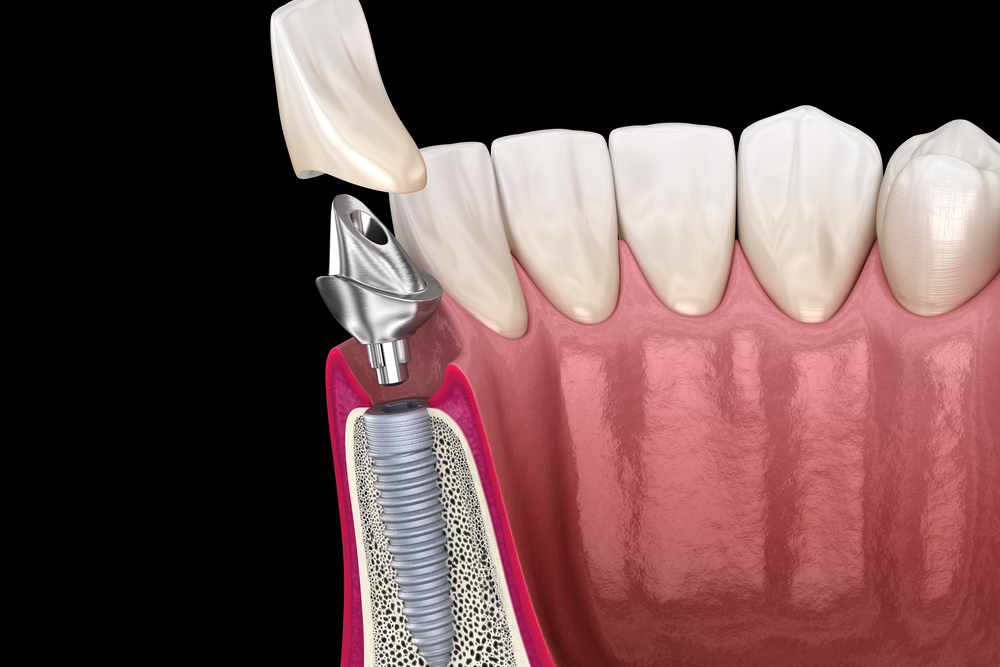
To fully appreciate the benefits of custom abutments, it’s helpful to review the basic structure of a dental implant restoration. Every implant case is built on three core components working together in harmony. First is the implant itself, the titanium screw that integrates with the jawbone to create a stable foundation. Next is the abutment, which acts as the crucial connector piece, linking the implant below the gumline to the final restoration. Finally, the visible part is the crown, which is meticulously crafted to look and function just like a natural tooth. The success of the entire structure depends on the precise fit and synergy between these three parts.
The Three Core Components: Implant, Abutment, and Crown
A dental implant restoration has three main parts: the implant fixture that sits in the jaw, the abutment that serves as a connector, and the crown that forms the visible part of the new tooth. The implant fixture is typically made of biocompatible titanium and fuses directly with the bone in a process called osseointegration, creating an incredibly strong anchor. The abutment then screws into the implant, protruding just above the gumline to provide a solid base for the final restoration. The crown is then cemented or screwed onto the abutment, completing the restoration with a natural-looking and fully functional tooth replacement that your patients will love.
Versatility in Restorations: Connecting to Bridges and Dentures
The abutment isn’t just a simple connector; it’s what gives implant restorations their incredible versatility. While a standard case involves one implant and one crown, abutments make it possible to address more complex situations. For example, they can be designed to support multi-unit bridges or even full-arch hybrid dentures, providing a stable anchor for larger prosthetics. This adaptability is especially important when dealing with angled implants or limited space between teeth. A well-designed abutment ensures the final restoration is properly aligned for optimal function and aesthetics, regardless of the implant’s placement. This flexibility allows you to create predictable, long-lasting results for a wider range of patient needs.
What Are Stock Abutments?
 Stock abutments are ready-made, produced in bulk, and available in standard shapes and sizes. Dentists use them when they want a quicker, more cost-effective option, as they can be fitted without needing to customize the piece for each individual. However, this can be a double-edged sword. Because stock abutments are not tailored for the specific patient, they may not always fit as well as they should. This can lead to various issues over time, including discomfort, challenges in cleaning the area around the implant, or even the failure of the implant if the alignment isn’t just right.
Why a Custom Fit Makes All the Difference
Custom abutments are designed specifically for you. They are crafted using digital scans or impressions of your mouth, which means they fit perfectly with your unique anatomy. This precision makes custom abutments much more comfortable and secure. The main benefit of custom implant abutments is that they fit exactly where they are needed, guaranteeing no discomfort and no misalignment. This can make the dental implant last longer and function better. Plus, with a better fit, the crown looks more natural, blending seamlessly with the surrounding teeth.
Key Clinical Advantages of Custom Abutments
Choosing a custom abutment offers significant clinical benefits that contribute to the long-term success and health of a dental implant. While a good fit is the most obvious advantage, the positive effects extend much deeper, influencing everything from gum health to the implant’s structural integrity. By creating a restoration that is perfectly harmonized with the patient’s biology, you can prevent common complications and provide a more stable, esthetic, and hygienic outcome. These advantages make custom abutments a superior choice for achieving predictable and lasting results for your patients.
Crafting an Ideal Emergence Profile for Healthier Gums
One of the most important benefits of a custom abutment is its ability to create a natural emergence profile. Custom abutments are designed to match the specific contours of the patient’s gingiva, guiding the tissue to heal in a way that mimics a natural tooth emerging from the gums. This tailored fit supports the surrounding soft tissue, promoting better adaptation and leading to healthier, more stable gums around the implant restoration. The result is not only improved periodontal health but also a more seamless and esthetically pleasing final crown that looks and feels completely natural.
Preventing Cement-Related Complications
Retained cement is a common cause of peri-implant inflammation and disease. With stock abutments, the margin is often placed deep below the gumline, making it incredibly difficult to remove all excess cement after seating the crown. Custom abutments solve this problem by allowing for precise margin placement, ideally at or just slightly below the gumline. This creates a connection that makes it much easier to access and clean away any residual cement, significantly reducing the risk of it getting trapped in the sulcus and causing inflammation or infection down the line.
Improving Long-Term Stability and Force Distribution
The precise fit of a custom abutment does more than just feel comfortable; it provides superior structural support. Because they are designed to perfectly match the implant’s angle and the surrounding anatomy, custom abutments create a stronger, more stable foundation for the final restoration. This ideal fit helps distribute chewing forces evenly along the axis of the implant, which protects the bone from undue stress and reduces the risk of component failure. This optimal force distribution is critical for the long-term stability and durability of the entire implant system, which we achieve through precise digital case solutions.
Enhancing Patient Hygiene
A restoration that is easy to clean is a successful restoration. Custom abutments create a smooth, continuous transition between the implant and the crown, eliminating the gaps and ledges often found with ill-fitting stock components. This seamless interface reduces areas where plaque and food particles can accumulate, making it much easier for patients to maintain proper oral hygiene with regular brushing and flossing. By facilitating better home care, custom abutments contribute directly to the long-term health of the surrounding tissues and the overall success of the implant.
How Abutments Affect Your Smile’s Appearance
Custom abutments offer more than just a good fit—they also look better. Because they are designed for you, the crown is positioned more accurately, so it matches your other teeth in size, shape, and even color. Additionally, custom abutments can be made from different materials like titanium or zirconia. This gives your dentist more flexibility to choose what works best for your situation. Stock abutments, on the other hand, may not provide the same level of customization. They could lead to gaps or an unnatural appearance where the crown meets the gums. For people getting implants in visible areas like the front teeth, this difference is especially important.
Material Options for Strength and Aesthetics
Choosing the right material for a custom abutment is a key decision that impacts both the durability and the final look of the restoration. The ideal material depends on the location of the implant, the patient’s gum tissue, and the desired aesthetic outcome. While strength is always a priority, you also want the final crown to look completely natural. The two most popular and effective materials, titanium and zirconia, offer distinct advantages. Understanding their properties will help you select the perfect foundation for a successful and beautiful implant restoration.
Titanium and Gold-Tone Titanium
When it comes to strength and reliability, titanium is the industry standard. Custom titanium abutments are crafted from a highly durable and biocompatible titanium alloy, ensuring a long-lasting and robust connection between the implant and the crown. This strength makes it an excellent choice for posterior teeth, where biting forces are greatest. For situations where the metal’s gray hue might show through thin gum tissue, gold-tone titanium offers a great alternative. The gold color provides a warmer, more natural-looking base, which helps prevent any grayness from affecting the final shade of the restoration, giving you more control over the aesthetic result.
Zirconia and Hybrid Abutments
For restorations in the aesthetic zone, zirconia is often the preferred material. Because zirconia is a tooth-colored ceramic, it eliminates the risk of a dark metal line appearing at the gumline. This allows the final crown to blend in seamlessly for a truly natural appearance. To combine the strength of titanium with the beauty of zirconia, hybrid abutments are a fantastic solution. These abutments feature a strong titanium base for a secure implant connection, topped with a custom-milled zirconia structure. This design gives you the best of both worlds: the durability needed for a lasting restoration and the superior aesthetics required for front teeth.
The Long-Term Value of a Custom Abutment
While custom abutments may cost more initially, the long-term benefits often outweigh the expense. A custom abutment is tailored for you, which means fewer complications, better comfort, and a more natural look. Although stock abutments may seem like a cheaper and faster option, they could lead to more adjustments down the line—potentially costing more in the long run.
When to Choose a Custom Abutment
While custom abutments offer a superior fit in most cases, there are specific clinical situations where they are not just beneficial, but essential for a successful outcome. Stock abutments have their place, but they can’t solve the complex challenges that often arise in implant dentistry. Understanding when to opt for a custom solution can make all the difference in the longevity of the restoration and the satisfaction of your patient. From tricky implant angles to unique soft tissue contours, a custom-designed abutment provides the control and precision needed to handle these cases with confidence and deliver a truly seamless result.
Correcting Angled Implant Placement
Ideal implant placement isn’t always possible due to anatomical limitations. When an implant has to be placed at an angle, a stock abutment can create significant restorative challenges, leading to a poorly aligned crown that looks unnatural and is difficult for the patient to clean. Custom abutments are the perfect solution here. They are specifically designed to correct the angle of the implant, ensuring the crown is positioned correctly in the arch. This allows you to connect the crown to an implant that might be angled or offset, creating a proper path of insertion and an esthetic result that integrates perfectly with the surrounding teeth.
Managing Irregular Gum Lines or Deep Placements
The patient’s soft tissue architecture plays a huge role in the final look of an implant restoration. Irregular gum lines or implants placed deep below the tissue margin can make it nearly impossible to achieve a natural emergence profile with a stock abutment. This can lead to dark shadows around the crown or food traps that compromise gum health. A custom abutment can be milled to follow the exact contours of the patient’s gingiva, creating a smooth, natural transition from the implant to the crown. This meticulous approach helps support the soft tissue and promotes long-term periodontal health.
Addressing Limited Interocclusal Space
In cases with limited vertical space between the arches, a stock abutment is often too bulky, leaving little room for the final crown. This can force you to compromise on the strength and esthetics of the restoration. Custom abutments solve this problem by being designed to fit within the exact space available. By taking a precise digital scan or impression, a dental lab can create a low-profile abutment that provides optimal support for the crown without being over-contoured. This ensures you can achieve a durable and beautiful restoration, even in the most challenging clinical situations.
The Custom Abutment Process and Technology
The creation of a custom abutment is a blend of clinical skill and advanced digital technology. Gone are the days of relying solely on manual adjustments and guesswork. Today, the process is driven by precision engineering that allows for an incredibly accurate and predictable outcome. By partnering with a digitally-equipped dental lab, you can streamline your workflow and deliver restorations that fit perfectly every time. This technological shift not only improves the quality of care for your patients but also makes the entire process more efficient for your practice, from the initial scan to the final seating of the crown.
The Role of CAD/CAM in Modern Dentistry
Computer-Aided Design/Computer-Aided Manufacturing (CAD/CAM) technology is at the heart of modern restorative dentistry. This technology allows dental technicians to design and mill custom abutments with unparalleled precision. The process starts with a digital scan of the patient’s mouth, which is then imported into specialized software. A technician can then design the abutment virtually, controlling every detail from the margin placement to the emergence profile. This digital workflow eliminates the inaccuracies associated with traditional impression and casting techniques, resulting in a final product that fits flawlessly and meets the highest standards of quality and function.
How Dental Labs Create Custom Abutments
At Next Dental Lab, we make the process of ordering custom abutments straightforward. It begins when you send us a digital scan or a traditional impression of the implant site. Our skilled technicians then use advanced CAD software to design an abutment that is perfectly tailored to your patient’s anatomy and your restorative plan. Once the design is finalized and approved, the abutment is precision-milled from a solid block of high-quality material like titanium or zirconia. This ensures maximum strength and biocompatibility, providing a reliable foundation for the final crown and a beautiful, long-lasting result for your patient.
System Compatibility
One of the biggest advantages of working with a full-service lab is broad system compatibility. Dentists use a wide variety of implant systems, and your lab partner should be able to accommodate them all. We fabricate custom implant abutments that are compatible with major systems, including BioHorizons, Straumann, Nobel, Dentsply, and Hiossen, among others. This versatility means you can confidently treat your patients using the implant system you trust, knowing we have the technology and expertise to create a perfectly fitting custom abutment for your case, ensuring a seamless workflow for your practice.
How to Choose the Right Abutment for You
Deciding between custom and stock abutments depends on your priorities. If you want the best fit, comfort, and aesthetics, custom abutments are likely the way to go. They offer a tailored solution that reduces the chances of future issues and makes sure the implant looks and feels natural. Next Dental Lab is committed to providing the right dental lab product for every patient. Whether you opt for custom or stock abutments, our experienced team will guide you through the process so that your dental implant is a long-lasting and successful investment. Contact us today for more information.
Frequently Asked Questions
What is the primary difference between a stock and a custom abutment? The main distinction is personalization. Think of stock abutments as being mass-produced in a few standard sizes, which may or may not fit a patient’s unique anatomy perfectly. A custom abutment, in contrast, is designed and created from a digital scan of the individual patient’s mouth. This patient-specific approach ensures an exact fit with both the implant and the surrounding gum tissue.
In which clinical situations is a custom abutment the best choice? Custom abutments are particularly valuable in complex cases where a standard component won’t work. They are the ideal solution for correcting angled implant placements, managing deep or uneven gum lines, and fitting restorations into areas with limited vertical space. In these situations, a stock abutment often cannot provide the precision needed for a successful, long-lasting result.
How do custom abutments improve the long-term health of the implant site? The precise fit of a custom abutment directly supports the health of the surrounding tissues. It creates a natural emergence profile that guides the gums to heal correctly and allows for margin placement that makes removing excess cement much easier, which reduces the risk of inflammation. This seamless design also eliminates tiny gaps where plaque can accumulate, making it simpler for patients to keep the area clean.
What material should I choose for a custom abutment? The best material depends on the implant’s location and your aesthetic goals. Titanium is incredibly strong and is a reliable choice for posterior teeth where chewing forces are high. For anterior teeth in the smile zone, zirconia is an excellent option because its tooth-colored nature prevents any dark metal from showing at the gumline. Hybrid abutments, which combine a titanium base with a zirconia structure, offer a great balance of both strength and aesthetics.
How does the digital process for creating a custom abutment work? The process uses CAD/CAM technology for maximum accuracy. It begins when you send our lab a digital scan of the implant site. Our technicians then use specialized software to design an abutment that is tailored to your patient’s anatomy and your restorative plan. Once the design is approved, the abutment is precision-milled from a solid block of high-quality material, resulting in a component that fits perfectly.
Key Takeaways
- Prioritize long-term health with a perfect fit: Custom abutments are designed for a patient’s unique anatomy, which supports healthy gum tissue, makes cleaning easier for the patient, and reduces the risk of inflammation caused by leftover cement.
- Solve complex clinical cases with precision: A custom abutment is the ideal solution for challenging situations like angled implants, irregular gum lines, or limited space, ensuring a successful and properly aligned restoration where a stock component would not work.
- Achieve superior aesthetics using the right materials: With options like zirconia and gold-tone titanium, custom abutments help you create a more natural-looking result by preventing any dark metal from showing through the gums, which is especially important for teeth in the smile zone.