Let’s be honest: patients don’t look forward to traditional dental impressions. The goopy material and bulky trays are often the least favorite part of their visit. What if you could eliminate that step entirely? With a quick, comfortable digital scan, you can capture more accurate information while giving your patients a modern, streamlined experience they’ll appreciate. This is one of the most immediate benefits of adopting CAD/CAM technology in your practice. It transforms the appointment from an uncomfortable necessity into an impressive demonstration of your commitment to quality care. In this article, we’ll explore how this technology not only produces incredibly precise and durable restorations but also helps you build stronger patient loyalty and trust.
Picture this: a patient walks into your practice hoping for a crown replacement. Instead of messy impressions and a long turnaround, you scan their teeth digitally, send the file to your lab, and receive a precisely milled crown days later—no back-and-forth adjustments needed. That’s the power of CAD/CAM dentistry. This innovative technology streamlines workflows, improves restoration quality, and cuts down time and costs. At Next Dental Labs, we’ve fully integrated CAD/CAM into our process to help dentists like you achieve better, faster, and more affordable results. Let’s take a closer look at how this tech is changing the game.
What Is CAD/CAM Dentistry?
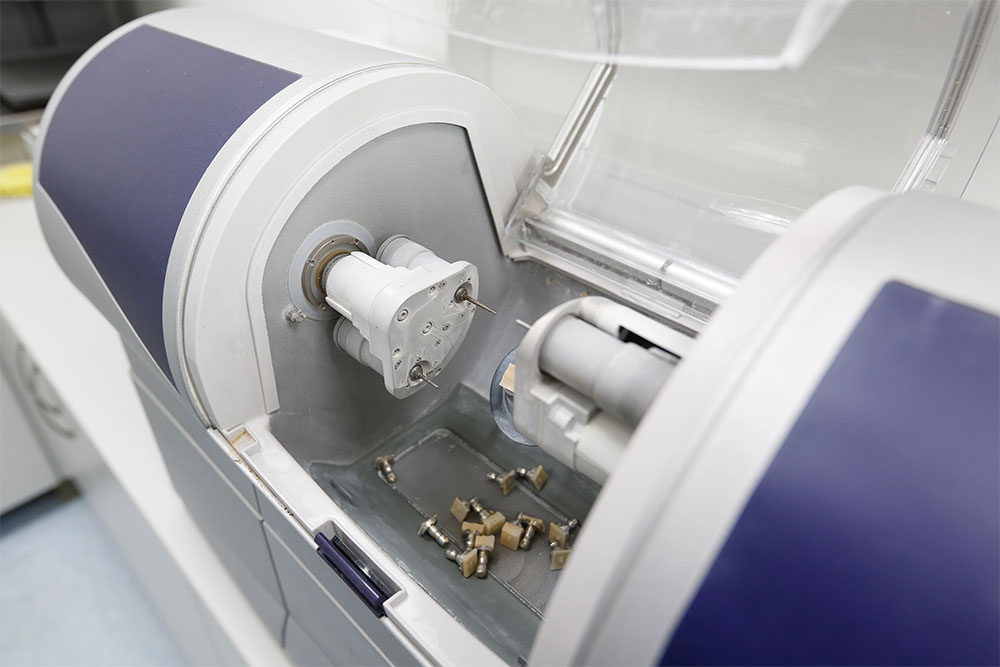 CAD/CAM stands for Computer-Aided Design and Computer-Aided Manufacturing. It’s a digital workflow used to design and fabricate dental restorations like crowns, bridges, dentures, and implant components. Instead of relying on traditional impressions and manual models, dentists can now scan a patient’s mouth using an intraoral scanner. That digital scan is then used to design the restoration on a computer (CAD) and manufacture it precisely using a milling machine or 3D printer (CAM).
A Brief History of CAD/CAM in Dentistry
While it feels cutting-edge, CAD/CAM technology has been evolving in dentistry for decades. The first systems were introduced to dental practices back in 1985, marking the beginning of a shift toward digital workflows that has only accelerated since.
It’s easy to think of CAD/CAM as a recent breakthrough, but its roots in dentistry go back further than you might expect. According to Colgate, dentists first started using this technology in 1985, setting the stage for the digital revolution in restorative work. Before it even entered the dental world, it was a staple in other manufacturing fields. In fact, the technology has been used in dentistry for over 20 years, giving it plenty of time to mature into the sophisticated systems we rely on today. This long evolution is why modern CAD/CAM workflows are so reliable, allowing labs like ours to create incredibly precise restorations, from single crowns to full-arch hybrid dentures, with remarkable consistency and speed.
Why Should Your Practice Care About CAD/CAM?
This technology brings several significant advantages to the table:
- Speed: Digital impressions are quicker and more comfortable for patients, and restorations can be created in a fraction of the time.
- Precision: Digital designs are extremely accurate, reducing the risk of poor fit, bite issues, or remakes.
- Consistency: Once a design works well, it can be replicated easily for consistent results across multiple cases.
- Patient Experience: Fewer appointments, faster turnaround, and better outcomes lead to happier patients.
Improved Patient Experience
Let’s be honest—no one loves the goopy, uncomfortable process of traditional impressions. Digital scanning completely changes the game for your patients. Instead of asking them to sit with a tray full of alginate, you can capture a precise 3D image of their mouth in minutes with a simple intraoral scanner. This technology, as noted by experts at Colgate, eliminates the need for those messy materials altogether. For practices with in-office milling, this can even lead to same-day dentistry, where a patient gets their final restoration in a single visit. This level of comfort and efficiency not only makes for a better appointment but also builds significant patient trust and loyalty in your practice.
Durability and Lifespan of Restorations
A common question from patients is, “How long will this last?” With CAD/CAM restorations, you can give them a confident answer. These restorations are crafted from high-quality, durable blocks of ceramic material, designed for longevity. On average, a well-made crown or bridge can last anywhere from 10 to 15 years, and sometimes even longer with proper care. Of course, this lifespan depends on factors like the patient’s oral hygiene and personal habits. For patients who grind their teeth, recommending a night guard is a great way to help them protect their investment and ensure the restoration serves them well for years to come.
The CAD/CAM Workflow: A Step-by-Step Look
Whether you handle restorations in-house or partner with a lab, the digital workflow follows a clear and efficient path. This process ensures accuracy from the initial scan to the final placement, minimizing adjustments and remakes. By sending your digital cases to a lab like Next Dental Lab, you get all the benefits of this precision technology without the overhead of maintaining in-office milling equipment. Here’s a breakdown of how a digital restoration goes from a scan to a smile.
Step 1: Preparation and Digital Scanning
Everything starts with preparing the tooth, just as you would for a traditional restoration. After removing any decay and shaping the tooth, you’ll use an intraoral scanner to capture a detailed 3D image. This digital impression is incredibly accurate, mapping every contour of the prepared tooth and the surrounding dentition. The scan is quick, comfortable for the patient, and creates a perfect digital model to work from. Once you have the scan, you can easily connect your scanner and send the file directly to the lab, kicking off a seamless and efficient production process.
Step 2: Designing the Restoration
This is where the “Computer-Aided Design” (CAD) comes into play. The 3D scan is loaded into specialized software where a skilled technician designs the custom restoration. This digital environment allows for incredible precision. Every detail, from the marginal fit and occlusion to the emergence profile and contact points, can be meticulously adjusted on the screen. This ensures the final product will fit perfectly within the patient’s bite and look completely natural. It’s a blend of technical skill and digital artistry that sets the foundation for a flawless result, eliminating the guesswork of older methods.
Step 3: Milling the Restoration
Once the digital design is finalized, it’s sent to a CAM milling machine. This is the “Computer-Aided Manufacturing” part of the process. The machine acts like a robotic sculptor, precisely carving the restoration from a solid block of high-strength ceramic or other dental material. It follows the exact specifications from the digital design file, ensuring the physical restoration is a perfect match to the virtual one. This automated process produces consistent, highly accurate results for everything from single crowns to complex dental implants and frameworks.
Step 4: Finishing and Glazing
After the restoration is milled, it’s time for the finishing touches that bring it to life. A lab technician will add custom stains and glazes by hand to match the shade and character of the patient’s natural teeth. This artistic step is crucial for achieving a seamless, aesthetic result that blends perfectly with the patient’s smile. The restoration is then fired in a specialized oven, which hardens the glaze and locks in the color. This final step ensures the restoration is not only strong and functional but also virtually indistinguishable from the surrounding teeth.
Step 5: Bonding the Restoration
With the restoration complete, the final step is to bond it into place. Because of the incredible precision of the CAD/CAM process, the fit is typically perfect, requiring minimal to no adjustments at the chair. You’ll simply try in the restoration, confirm the fit and aesthetics, and then permanently bond it to the patient’s prepared tooth. For practices with in-office systems, this entire process can happen in a single visit. For those partnering with a lab, the streamlined digital workflow ensures a quick turnaround and a final product that seats smoothly and efficiently, saving you valuable chair time.
A Look Inside a CAD/CAM Dental Lab
In the lab, CAD/CAM technology helps streamline workflows and reduce the chance of human error. We use it to create highly detailed and customized restorations that meet each dentist’s exact specifications. This is especially important when working with complex cases like multi-unit bridges or implant-supported restorations, where precision is key. CAD software allows for easy adjustments before manufacturing, which saves time and helps avoid trial-and-error adjustments after delivery.
Can Better Restorations Really Cost Less?
One myth about digital dentistry is that it costs more, but in reality, it can cost less. At Next Dental Labs, our use of CAD/CAM dentistry allows us to deliver the same or better quality than high-priced competitors while keeping our prices more than 50% lower. By reducing manual labor and material waste, we pass those savings on to the dentists we work with. The result? More efficient cases, better margins for your practice, and fewer remakes or adjustments.
Limitations and Important Considerations
While the benefits are clear, it’s also important to have a realistic view of the technology. CAD/CAM is a powerful tool, but it comes with a few considerations that every dental professional should keep in mind. Understanding these nuances helps you make the best clinical decisions for your patients and your practice, ensuring that you’re leveraging digital dentistry for what it does best. It’s not about replacing traditional methods entirely, but about integrating a new set of tools to achieve superior results where they are most effective. This balanced perspective is key to navigating the evolving landscape of dental technology successfully.
Technology Complements, Not Replaces, Skill
As impressive as CAD/CAM technology is, it’s important to remember that it’s a tool in the hands of a professional, not a replacement for clinical expertise. The success of any restoration still begins with meticulous tooth preparation and a thoughtful design approach. Even the most advanced milling machine can’t correct a poor margin or an inaccurate scan. A poorly designed restoration can lead to an improper fit, open margins, or occlusal issues down the line. This is why the partnership between a skilled dentist and an experienced lab technician remains so vital. The technology facilitates precision, but the knowledge and skill behind it ensure a successful, long-lasting outcome for the patient.
Not a One-Size-Fits-All Solution
While CAD/CAM technology covers a vast range of dental needs, it isn’t the perfect solution for every single case. Dentists must use their clinical judgment to determine the best approach for each unique situation. For instance, cases with extremely deep subgingival margins can be challenging to capture accurately with an intraoral scanner, and a traditional impression might yield a more predictable result. Similarly, some highly complex full-mouth reconstructions may benefit from the tactile feedback and artistry of conventional lab techniques. The key is having the flexibility to choose the right workflow, whether digital or traditional, to achieve the best possible outcome for your patient.
Aesthetic Considerations
The aesthetics of CAD/CAM restorations have made incredible strides, with modern ceramic blocks offering excellent shade matching and translucency. However, for cases where aesthetics are the absolute highest priority, like an anterior crown, a monolithic restoration might not always capture the subtle characterization of a natural tooth. A hand-layered porcelain restoration, crafted by a skilled ceramist, can often achieve a higher level of artistry and vitality. That said, for most posterior restorations and many anterior cases, the strength, fit, and appearance of a milled crown or bridge are exceptional. It’s all about weighing the clinical requirements with the patient’s aesthetic expectations to select the ideal material and technique.
Making the Switch to a Digital Dental Lab
We don’t just use technology for the sake of it—we use it to help dentists thrive. Whether you’re new to digital impressions or already using them in your practice, we’re here to help you take full advantage of what CAD/CAM offers. At Next Dental Labs, we combine innovative technology with expert service to make sure your restorations are accurate, affordable, and delivered on time.
Frequently Asked Questions
How does the accuracy of a digital scan compare to a traditional impression? Digital scans often provide a more accurate starting point for restorations. They capture the fine details of a patient’s dentition without the variables that can affect traditional impressions, such as material shrinkage, expansion, or accidental distortion during removal. This high level of precision from the very first step means the final restoration is more likely to fit perfectly with minimal chairside adjustments.
What kinds of restorations can be made with CAD/CAM technology? The versatility of CAD/CAM is one of its greatest strengths. It’s used to create a wide range of restorations, from single crowns and multi-unit bridges to custom implant abutments and full-arch hybrid dentures. The technology allows for consistent and precise fabrication for both simple and highly complex cases, making it a reliable solution for much of modern restorative dentistry.
Do I need an in-office milling machine to take advantage of CAD/CAM? Not at all. You can get the biggest patient-facing benefit, the comfortable and quick digital scan, by simply using an intraoral scanner in your practice. From there, you can send the digital file directly to a lab like ours. This approach allows you to avoid the significant investment and maintenance of milling equipment while still providing your patients with modern care and receiving highly accurate restorations.
Are CAD/CAM restorations as aesthetically pleasing as traditionally made ones? Modern ceramic materials have come a long way, offering excellent translucency and shade matching that looks incredibly natural for most cases. For posterior teeth, the aesthetics are fantastic. In certain highly demanding situations, like a single central incisor, a skilled ceramist hand-layering porcelain might achieve more subtle characterization. However, for the vast majority of restorations, CAD/CAM provides a beautiful and durable result.
How difficult is it to start sending digital cases to a lab? The process is surprisingly straightforward. Once you have an intraoral scanner, you simply connect it to our lab through an online portal. After you complete a scan, you can upload the digital file directly to us with your prescription. It eliminates the need to pack and ship physical impressions, creating a faster, more direct, and more efficient workflow from your chair to our lab.
Key Takeaways
- Modernize your patient experience: Replace uncomfortable traditional impressions with quick digital scans to make appointments more pleasant, which helps build patient trust and loyalty in your practice.
- Achieve predictable, accurate outcomes: The digital workflow from scan to mill produces exceptionally precise restorations, leading to fewer remakes, minimal chairside adjustments, and better results for your patients.
- Balance technology with clinical expertise: CAD/CAM is a powerful tool that enhances precision, but it doesn’t replace professional skill; successful outcomes still depend on meticulous prep work and a strong partnership with your lab.
Related Articles
- Your Guide to Digital Dental Lab Services in Austin
- Digital Dental Laboratory vs Traditional Labs: Key Differences | Next Dental Lab
- CAD/CAM Dentistry: Digital Transformation | Next Dental Lab
- What is CAD/CAM Technology? A Dentist’s Guide
- Types of Intraoral Scanners & Dental Scanning Technology | Next Dental Lab