Remakes are one of the biggest hidden costs in any dental practice. They waste valuable chair time, consume expensive materials, and can delay patient treatment. Many of these issues start with a flawed impression. Intraoral scanners directly address this problem by delivering exceptional accuracy from the very first scan. This precision is one of the most significant intraoral scanner advantages, leading to better-fitting restorations and a dramatic reduction in the need for adjustments or remakes. In this article, we’ll cover how switching to a digital workflow can streamline your operations, lower your overhead, and help you deliver consistently excellent results with a lab partner ready for your digital files.
Are you tired of messy impressions and time-consuming remakes? You’re not alone. Many dental professionals are rethinking their workflows, and intraoral scanners are leading the change. These digital tools are reshaping how we capture impressions, communicate with labs, and deliver care, all while making the process more comfortable for patients. Intraoral dental scanners are more than just a tech trend—they’re a smart investment in speed, accuracy, and modern patient experience. At Next Dental Labs, we’ve embraced this shift, making it easy for you to send digital scans and get high-quality, lab-crafted restorations at prices that help your practice thrive.
How Intraoral Scanners Work
Intraoral scanners might seem like magic, but their process is grounded in sophisticated optical technology. At its core, the scanner is a handheld wand connected to a computer and software. As you move the wand around the patient’s mouth, it projects a light source onto the teeth and gums. Tiny, advanced cameras inside the wand capture thousands of images per second from various angles. This process is quick, non-invasive, and far more comfortable for the patient than traditional impression materials. The real power, however, lies in how the software interprets this visual data to build a precise, interactive model of the patient’s oral anatomy.
Capturing the 3D Model
Once the scanner captures the raw images, the accompanying software gets to work. It uses complex algorithms to stitch the thousands of individual pictures together, much like creating a panoramic photo, but in three dimensions. The software identifies unique points on the tooth and gum surfaces to align each image perfectly, building a complete and highly detailed digital impression. According to research, these digital impressions are incredibly accurate, capturing even the most subtle details of the patient’s dentition. The result is a virtual 3D model that you can view, rotate, and magnify on-screen, allowing for immediate verification of the scan quality before the patient even leaves the chair.
This detailed 3D model becomes the digital blueprint for the patient’s restoration. Instead of shipping a physical impression, you can securely send this digital file directly to your lab partner. This seamless workflow eliminates the risk of distortion that can occur with traditional impressions and significantly shortens turnaround times. The precision of the initial scan translates directly into the final product, leading to better-fitting crowns, bridges, and implants with fewer adjustments needed. At Next Dental Lab, we make it simple to connect your scanner to our system, ensuring your digital cases are received instantly and fabrication can begin without delay.
Capture Quick, Comfortable Impressions
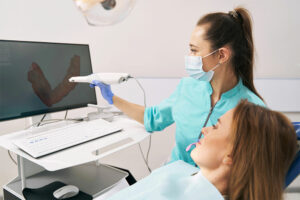 Gone are the days of messy trays and gag-inducing putty. Intraoral scanners allow you to capture a complete digital impression in minutes, without discomfort for the patient. The result is a faster chairside experience and higher patient satisfaction. It’s especially valuable for patients with a strong gag reflex or for pediatric and geriatric care.
Improve Hygiene and Sustainability
Beyond accuracy and patient comfort, intraoral scanners bring major benefits to your practice’s hygiene and environmental footprint. Switching to digital impressions helps you streamline infection control and cut down on material waste. This cleaner, more modern approach protects your patients and staff while positioning your practice as a responsible member of the community. It’s a simple change that makes a big difference, reflecting a commitment to both high-quality care and sustainable practices. When you go digital, you’re investing in a workflow that is as conscientious as it is efficient.
Reduce Contamination Risks
Maintaining a sterile environment is fundamental to patient care, and digital scanning makes it easier to uphold the highest standards. Traditional impression methods use trays and materials that can be tough to sterilize and may pose a cross-contamination risk. Intraoral scanners remove this concern. By using a wand with a disposable tip for each patient, you significantly reduce the risk of spreading germs. This creates a safer environment for everyone in your office and simplifies your cleanup process, freeing up your team to focus more on patient care instead of managing potentially contaminated materials.
Minimize Environmental Waste
A busy dental practice can generate a lot of waste, from disposable trays and impression materials to stone models. Intraoral scanners provide a greener alternative by digitizing the entire workflow. This shift drastically cuts down on the physical materials you use and discard every day. By choosing to scan, you create significantly less waste and shrink your practice’s environmental footprint. It’s a responsible choice that aligns with the growing demand for sustainable healthcare, showing patients that you care about the planet as much as you care about their smiles.
Achieve Higher Accuracy, Fewer Remakes
One of the biggest advantages of intraoral scanners is their precision. Digital impressions reduce common issues like distortion, bubbles, or voids found in traditional impressions. Better accuracy means better-fitting crowns, bridges, dentures, and implants, leading to fewer remakes and less time spent on adjustments. When we receive digital impressions at Next Dental Labs, our CAD/CAM team can get to work immediately. That means faster cases back to your office with minimal chairside corrections needed.
Digital vs. Traditional Impression Accuracy
Let’s talk numbers. When it comes to accuracy, digital impressions have a clear edge over traditional methods. Research consistently shows that the fit is significantly better with digital scans. One comprehensive study highlighted this difference, finding that the average gap for restorations made from digital impressions was less than half the size of those from traditional putty impressions. This level of precision isn’t just a minor improvement; it’s a fundamental shift in how well a crown or bridge can fit from the very start. This superior accuracy is a key reason why so many practices are making the switch.
So, what makes digital so much more reliable? Traditional impressions are susceptible to a host of issues—dimensional changes as the material sets, the risk of contamination, and simple human error. Digital scanning sidesteps these problems entirely. There are no physical materials to warp or shrink, and if you miss a spot or the scan isn’t perfect, you can see it on the screen and correct it instantly. This immediate feedback loop eliminates the guesswork and the frustrating need for a complete do-over. It ensures that the file you send to the lab is a true, precise representation of the patient’s anatomy, setting the stage for a perfect final product.
Work Seamlessly with Your Dental Lab
Digital impressions can be uploaded and shared instantly, allowing seamless communication between your office and our lab. This speed and transparency help us spot potential problems early—whether it’s margin clarity, occlusion issues, or prep design—and collaborate with you in real time. Working digitally with Next Dental Labs makes your entire lab process faster, clearer, and more predictable.
Choosing the Right Scanner System
Okay, so you’re ready to invest in a scanner. That’s a big step! But before you decide, it’s important to understand one of the most critical factors: whether the system is “open” or “closed.” This isn’t just a technical detail; it fundamentally shapes how you’ll work with labs and integrate technology into your practice for years to come. The choice you make here will determine your flexibility, your workflow efficiency, and your ability to collaborate with partners who best fit your needs. It’s a decision that directly impacts how easily you can send cases to labs like us at Next Dental Lab and get the results you expect.
Open vs. Closed Systems
An open system is exactly what it sounds like—it gives you freedom. These scanners are designed to be compatible with a wide range of dental lab software, which means you can continue working with your preferred labs without any hassle. This flexibility is key for a streamlined workflow and allows you to choose partners based on the quality of their work, not their software limitations. At Next Dental Lab, we’ve made it simple to connect your open-system scanner to our digital platform, so you can send cases to us instantly and keep your practice running smoothly.
On the other hand, a closed system locks you into a specific manufacturer’s ecosystem, limiting your choice of software and lab partners. While these systems can work well, they might restrict your practice’s agility in the long run by tying you to a single vendor for everything from software updates to lab services. When you’re making such a significant investment, it’s wise to consider the long-term implications. Choosing an open scanner ensures you can always collaborate with the labs that deliver the quality and service your practice deserves, giving you control over your digital future.
Integrate Scans into Your CAD/CAM Workflow
If you offer same-day restorations or work with CAD/CAM-fabricated prosthetics, intraoral scanners are the foundation of that workflow. Digital files integrate directly into CAD design systems, speeding up fabrication and reducing errors. Even if you’re not fabricating in-house, digital scans sent to our lab allow us to deliver more precise crowns, nightguards, dentures, and implant restorations with superior fit and esthetics.
Streamline Practice Management
Beyond the clinical benefits, intraoral scanners transform the way your practice operates. They create efficiencies that impact everything from your bottom line to your team’s daily workflow, making your entire office run more smoothly. This technology is a key component in building a more productive, modern, and patient-friendly practice.
Reduce Operational Costs
Intraoral scanners are changing dentistry by making procedures more accurate and efficient, which directly impacts your operational expenses. You can say goodbye to the recurring costs of impression materials, trays, and shipping. Plus, you’ll save valuable time on cleanup and material management. When you factor in the reduced chair time from faster appointments and fewer remakes, the financial benefits become clear. It’s a smart investment that pays for itself by creating a leaner, more productive workflow, allowing you to allocate resources to other areas of your practice.
Gain a Competitive Edge
In a crowded market, patient experience is a powerful differentiator. Adopting an intraoral scanner shows patients you’re committed to providing modern, comfortable care. It’s a tangible upgrade they can see and feel, which helps your practice stand out from competitors still using traditional methods. Marketing your “goo-free” impression process can attract new patients who are anxious about dental visits or simply seek out practices with the latest technology. This isn’t just about keeping up; it’s about leading the way in patient-centered care and building a reputation for excellence.
Empower Your Dental Team
An intraoral scanner is a tool for your entire team, not just the dentist. Modern scanners are designed to be intuitive and easy to learn, allowing trained staff to handle the scanning process where regulations permit. This delegation frees up your time to focus on diagnosis, treatment planning, and more complex procedures. When your team is empowered to take on new responsibilities, it improves overall office morale and efficiency. The streamlined digital workflow also reduces the physical labor of mixing materials and disinfecting trays, making daily tasks simpler for everyone involved.
Increase Case Acceptance with 3D Scans
Intraoral scanners aren’t just for scanning—they’re great for showing patients exactly what’s going on in their mouths. Real-time 3D imaging helps patients visualize problems, better understand treatment plans, and feel more confident about continuing care.
Expand Your Clinical Applications
An intraoral scanner does more than just replace traditional impression materials for crowns and bridges. It opens the door to offering a wider range of clinical services right in your practice. By integrating digital scanning, you can confidently expand into high-demand areas like orthodontics, oral surgery, and sleep medicine. This not only adds new revenue streams but also positions your practice as a modern, comprehensive care provider. The versatility of a single piece of equipment allows you to streamline workflows across different specialties, making it easier to manage complex cases and collaborate with specialists, all while keeping the patient experience smooth and comfortable.
Orthodontics
For orthodontic treatments, precision is everything. Intraoral scanners are instrumental in planning for braces, clear aligners, and retainers. They capture incredibly detailed digital models that allow for more accurate treatment planning and predictable outcomes. This eliminates the distortions common with alginate impressions and gives you a perfect digital starting point for case design. Patients appreciate avoiding messy impressions, and you get a clear, manipulable 3D model that makes case presentation and patient education far more effective. The digital file can be sent instantly to labs or aligner companies, speeding up the entire treatment timeline from start to finish.
Oral Surgery
When it comes to oral surgery, having a clear picture of the surgical site is critical. Intraoral scanners provide detailed images of not just the teeth but also the surrounding gums and soft tissues. This information is essential for planning procedures like implant placements, extractions, and gingival grafts. The 3D models can be used to design precise surgical guides, ensuring implants are placed at the ideal depth and angulation. This level of detail helps you plan surgeries more effectively, anticipate challenges, and ultimately improve surgical outcomes for your patients.
Sleep Appliances
Treating sleep disorders like sleep apnea is a growing field in dentistry, and intraoral scanners make it much easier to offer these services. The scanner quickly and comfortably captures the necessary impressions to create custom-fit oral appliances. This digital workflow simplifies a traditionally complex process, removing barriers for both the clinician and the patient. By making the impression process fast and gag-free, you can more readily provide custom devices that help patients manage their sleep disorders, improving their overall health and quality of life while expanding your practice’s treatment offerings.
Understanding the Limitations of Intraoral Scanners
While intraoral scanners offer incredible benefits, it’s important to have a realistic view of their challenges. Like any technology, they come with a few hurdles, from the initial setup to daily use. Being aware of these limitations helps you make an informed decision and prepare your practice for a successful transition to a digital workflow. Thinking through the financial commitment, staff training, and clinical best practices will ensure you get the most out of your investment and avoid common frustrations along the way. Acknowledging these factors is the first step toward overcoming them and fully realizing the advantages of digital dentistry.
Initial Investment and Ongoing Fees
Let’s be practical: the initial outlay for an intraoral scanner is significant. The hardware itself represents a major capital investment for any practice, and it doesn’t stop there. Most scanner systems also come with annual software subscription or maintenance fees to keep the device updated and functional. When evaluating different scanners, it’s crucial to look beyond the sticker and consider the total long-term commitment. Factoring in these recurring operational expenses will give you a clearer picture of the overall financial impact and help you budget accordingly for a sustainable digital workflow.
The Learning Curve for Staff
Adopting an intraoral scanner requires an adjustment period for your entire team. While the technology is becoming more user-friendly, there is still a learning curve. Initially, a scan that will eventually take minutes might take a new user 15–20 minutes to complete. Studies suggest it takes about 10 scans for a team member to become significantly faster and more proficient. Building in dedicated training time and being patient during the initial implementation phase is key. Encouraging your team and setting realistic expectations will help everyone adapt smoothly and build confidence with the new technology.
Accuracy in Difficult Conditions
Intraoral scanners perform best in a clean, dry field. Their accuracy can be compromised in challenging clinical situations. For example, the presence of moisture can reduce accuracy, and it can be difficult to capture clear data from subgingival margins or areas with active bleeding. Proper tissue retraction and moisture control are just as important with digital scanning as they are with traditional impressions. Mastering techniques to manage these conditions is essential for capturing the high-quality scans needed for precisely fitting restorations like the crowns and bridges we fabricate.
Technical and Environmental Factors
Beyond moisture control, other factors can interfere with scan quality. Contaminants like saliva or blood can obstruct the scanner’s lens and lead to inaccurate data capture. Even environmental conditions in the operatory, such as intense ambient light or temperature fluctuations, can sometimes affect a scan’s performance. It’s important to follow the manufacturer’s guidelines for operation and maintenance to minimize these variables. Ensuring the scanner lens is clean and the environment is controlled will help you achieve consistent, reliable results with every scan you take.
Data Security Responsibilities
Shifting from physical impressions to digital files introduces a new and critical responsibility: data security. Digital impressions are protected health information (PHI), and your practice is responsible for keeping that patient data safe and private in compliance with HIPAA regulations. This means ensuring your network is secure, your data is encrypted, and you have protocols in place for safely storing and transmitting files. When you send digital cases to a lab partner like Next Dental Lab, you can be confident that we also prioritize secure, compliant data handling on our end.
The Future of Digital Impressions
The world of digital impressions is constantly evolving, and the future looks even more promising. We can expect future intraoral scanners to become even faster, more accurate, and more compact, with enhanced software powered by artificial intelligence to simplify the scanning process. Deeper integration with other digital tools, like 3D printers and in-office mills, will continue to streamline workflows for everything from diagnostics to final restorations. As this technology advances, labs and practices that have embraced digital workflows will be perfectly positioned to adopt these innovations, further improving efficiency and the quality of patient care.
Ready to Modernize Your Dental Workflow?
The future of dentistry is digital, and intraoral dental scanners are leading the charge. They help reduce errors, increase efficiency, and create a more comfortable experience for everyone involved. By partnering with Next Dental Labs, you’ll gain the full benefit of working with a digital-friendly lab that knows how to maximize the potential of intraoral scanning, while saving you over 50% on lab costs. Let’s modernize your workflow together.
Frequently Asked Questions
How long does it really take for my team to get comfortable using a new scanner? There’s definitely an adjustment period, but it’s probably shorter than you think. While the first few scans might feel slow, most dental professionals find their rhythm after about 10 cases. The key is to be patient and give your team dedicated time to practice. Once they are comfortable, the speed and efficiency you gain will make the initial learning phase well worth the effort.
What’s the most important factor when choosing a scanner system? Beyond the technical specs, you should seriously consider whether a system is “open” or “closed.” An open system gives you the freedom to send your digital files to any lab that accepts them, including us. A closed system, however, can lock you into a specific manufacturer’s network. Choosing an open system gives your practice more flexibility and ensures you can always partner with the lab that best meets your needs.
Besides crowns, what other procedures can I use an intraoral scanner for? An intraoral scanner is incredibly versatile and can support a wide range of services. It’s a fantastic tool for orthodontic cases like clear aligners, where precision is critical from the start. You can also use it for planning oral surgery, such as creating surgical guides for implants, or for fabricating custom-fit sleep appliances. It really opens the door to expanding your clinical offerings with one piece of equipment.
How can I ensure I get a good scan, especially around tricky margins? Getting a great scan comes down to managing the clinical environment, just like with traditional impressions. The scanner needs a clear, dry field to capture accurate data. Proper tissue retraction and moisture control are essential, especially for subgingival margins. If you master these techniques, you’ll provide us with the clean, precise data we need to create perfectly fitting restorations.
I already have a scanner. How easy is it to start sending my digital cases to Next Dental Lab? It’s very simple. We are set up to work with files from all major open-system scanners. You can visit our website to find instructions for connecting your specific scanner to our portal. Once you’re connected, you can send your digital impressions to us instantly, which allows our team to begin working on your case without delay.
Key Takeaways
- Get better-fitting restorations the first time: Digital impressions are incredibly precise, helping to eliminate the common errors found in traditional putty molds and drastically cutting down on chairside adjustments and remakes.
- Create a better patient experience and a more efficient office: Digital scanning replaces messy impression putty with a quick, comfortable process that patients appreciate, while also reducing material waste and streamlining your team’s workflow.
- Work more effectively with your lab: Sending digital scans allows for instant communication and collaboration with your lab partner, leading to faster case turnarounds and more predictable results from start to finish.