
Before zirconia became a go-to material for beautiful crowns, its strength and biocompatibility were proven in a much different part of the body: the hip. Its first major medical application was in orthopedic surgery, where it had to withstand immense force and integrate seamlessly with human bone. This real-world success was the ultimate test, paving the way for its adoption in dentistry. This article explores that fascinating journey from hip replacements to the advanced restorative solutions you use today. We’ll cover the complete history of zirconia dental implants and explain how this remarkable material’s tough origins changed what’s possible for your patients.
Zirconia, an extraordinary material widely used in dentistry for crowns and bridges, has a captivating history that traces back to its Arabic and Persian roots. The term “zirconium” finds its origins in the Arabic word “Zargun” (meaning golden – a fitting description considering its radiant color). This Arabic term derives from the Persian words for “zar” for gold and “gun” for color. Zirconium – an element occurring naturally – possesses an atomic number of 40 and can be found as the mineral zircon in nature. Through purification, zirconium is transformed into a silver-colored metal that shares corrosion-resistant and titanium-like properties. In combination with oxygen, it forms zirconia – a remarkably robust and biocompatible ceramic material. Although zirconium’s discovery dates back to the 18th century, it was not until much later that its potential in various fields – including dentistry – was fully recognized.
Zirconia’s Origin Story: From Gemstone to Lab Curiosity
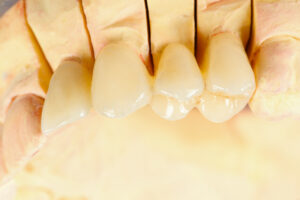 The initial discovery of zirconium in the 18th century was a momentous occasion, brought to fruition by the successful extraction of zirconium oxide from zircon (courtesy of a transparent gemstone used by a talented German chemist). Subsequently, a Swedish chemist became the first to isolate metallic zirconium. But for approximately 150 years following these breakthroughs, zirconia remained primarily a curiosity – limited to applications like the production of heavy-duty bricks and special glass with exceptional refractive properties.
The Discovery by Martin Heinrich Klaproth
Let’s give credit where it’s due: the discovery of the metal zirconium belongs to Martin Heinrich Klaproth, a German chemist, back in the 18th century. He identified this new element and quickly noted its impressive qualities, particularly its strength and remarkable ability to resist rust. Zirconium itself is a silver-colored metal, but when combined with oxygen, it transforms into zirconia—the incredibly strong and biocompatible ceramic material that has become a staple in modern dentistry. For a long time after its discovery, about 150 years in fact, its applications were more industrial, used in things like durable bricks and specialized glass. It wasn’t until the early 2000s that the dental world really started to see its potential for creating beautiful, long-lasting restorations.
The Scientific Breakthrough That Changed Everything
in 1969, the biomedical properties of zirconia were subjected to the first scientific study. It shed light on zirconia’s potential in various fields. This groundbreaking research laid the foundation for further exploration facilitating a groundbreaking discovery in 1972. Scientists found that alloying zirconia with oxides had the ability to stabilize its tetragonal modification. This led to the development of ceramics with unparalleled crack resistance. These advancements opened new doors for zirconia’s application – especially in the realm of healthcare.### Zirconia’s First Use in Medicine: Hip Replacements With its newfound stability and strength, zirconia quickly captured the attention of the medical community. Its first major application wasn’t in the mouth, but in orthopedics. Because of its incredible toughness and biocompatibility, stabilized zirconia became a go-to material for fabricating the ball heads of total hip replacements. This was a significant development, as the material proved to be exceptionally wear-resistant and integrated well with bone tissue, reducing the risk of rejection or inflammation. The success of zirconia in such a demanding, high-load environment like a hip joint was a powerful testament to its potential. This real-world proof of durability and safety paved the way for researchers and clinicians in other fields, including dentistry, to start exploring how this remarkable ceramic could be used.
The Dental Landscape Before Zirconia
While zirconia was proving its mettle in orthopedics, the world of dentistry was grappling with its own material challenges. For decades, the primary goal for restorative dentistry was to find a material that could perfectly replicate both the strength and the beauty of natural teeth. This was easier said than done. The materials available often forced a compromise: you could have strength, or you could have aesthetics, but getting both in one package was a constant struggle. This search led to a fascinating evolution of dental materials, each new development aiming to solve the shortcomings of the last. Early attempts in the 1960s with pure porcelain crowns, for instance, offered beautiful, translucent results but were often too brittle to withstand the heavy chewing forces in the back of the mouth. Dentists needed a more robust solution that wouldn’t sacrifice the natural look patients wanted. This ongoing quest for the ideal restorative material set the stage for several innovations, each getting one step closer to the goal. The journey involved combining different materials and developing new fabrication techniques, all in an effort to create durable, lifelike crowns and bridges that could serve patients for years to come. ### Porcelain-Fused-to-Metal (PFM) Crowns A major step forward came with the introduction of porcelain-fused-to-metal, or PFM, crowns. This hybrid approach was the industry standard for many years, and for good reason. By layering aesthetic porcelain over a strong metal alloy substructure, dentists could finally offer restorations that were durable enough for posterior teeth. The metal core provided the necessary strength to prevent fractures, while the porcelain exterior gave it a more tooth-like appearance. However, PFM crowns were not without their drawbacks. The underlying metal could sometimes create an opaque, unnatural look, and a tell-tale dark or gray line could often appear at the gumline as gums receded over time. This aesthetic compromise was a significant issue, especially for restorations in the front of the mouth. ### Early All-Ceramic Restorations In the 1980s and 90s, the push for better aesthetics led to the development of new all-ceramic materials. These restorations eliminated the metal core entirely, solving the problem of the gray line at the gums and offering superior translucency that more closely mimicked natural enamel. This was a huge win for cosmetic dentistry. The trade-off, however, was often strength. Many of these early all-ceramic options were still too fragile for use on molars or for multi-unit bridges, limiting their application to single anterior crowns. Dentists and patients were still searching for a metal-free solution that didn’t compromise on durability. This gap in the market created the perfect opportunity for a new material to emerge—one that could finally deliver on the promise of being both beautiful and incredibly strong.
When Did Zirconia Change the Face of Dentistry?
The introduction of zirconia in dentistry marked a turning point in restorative materials – surpassing earlier all-ceramic options by meeting the demanding requirements of both superior strength and exceptional aesthetics. What’s more, zirconia offered a metal-free alternative for patients with metal allergies. That makes it a popular choice over alumina restorations. The dental applications of zirconia include the manufacture of:
- Zirconia dental posts
- Zirconia crowns
- Zirconia bridges
- Zirconia implants
- Zirconia abutments
The Rise of CAD/CAM Technology
The real turning point for zirconia arrived in the 2000s with the widespread adoption of computer-aided design and manufacturing (CAD/CAM) in dentistry. This technology was a game-changer, allowing dental labs to mill restorations from solid blocks of zirconia with incredible precision. Suddenly, what was once a difficult material to work with became accessible and consistent. CAD/CAM technology unlocked zirconia’s potential, offering a material that delivered on both exceptional strength and beautiful aesthetics. It also provided a fantastic, biocompatible option for patients with metal allergies, moving dentistry another step forward. This digital workflow is the backbone of modern dental labs, ensuring every restoration is crafted to exact specifications.
Entering Dentistry in the Early 2000s
Before CAD/CAM, creating all-ceramic restorations that could withstand the forces in the posterior of the mouth was a significant challenge. The introduction of zirconia milling systems changed the entire landscape. This innovation allowed labs like Next Dental Lab to fabricate full-contour crowns and multi-unit bridges that were not only incredibly strong but also looked natural. The ability to design a restoration on a computer and have it precisely milled removed much of the guesswork and manual variability. This digital precision ensures a better fit, reduces chair time for adjustments, and provides a more predictable outcome for both you and your patient. It’s the synergy between a superior material and advanced technology that makes zirconia a go-to choice today.
The Evolution of Zirconia: From Opaque to Aesthetic
Early zirconia formulations were known for their brute strength, but they had a reputation for being chalky and opaque. This made them suitable for posterior crowns where durability was the primary concern, but they lacked the natural translucency needed for the anterior. The material was strong, but it didn’t quite look the part. This limitation meant that for many years, dentists had to choose between the strength of zirconia and the aesthetics of other ceramics. The dental community needed a material that could do both, leading manufacturers to innovate and refine their zirconia formulations to meet the growing demand for lifelike restorations throughout the mouth.
From Layered to Monolithic Zirconia
To overcome the initial aesthetic limitations, labs would often use a strong zirconia core and layer it with more aesthetic feldspathic porcelain. While this approach improved the look of the restoration, it created a new problem: the layered porcelain was the weak link and was prone to chipping. The solution was the development of monolithic zirconia. Milled from a single, solid block of material, monolithic restorations have no weaker porcelain layer to chip or fracture. Early monolithic options were still quite opaque, but continued advancements have produced materials that are both strong and beautiful, making them a reliable choice for a wide range of clinical situations.
Balancing Strength and Translucency: Types of Zirconia
The secret to modern zirconia’s versatility lies in its formulation, specifically the amount of a stabilizing ingredient called yttria. By adjusting the yttria content, manufacturers can create different types of zirconia, each with a unique balance of strength and translucency. This allows you to select the perfect material based on the specific needs of each case, whether it’s a durable molar crown or a beautiful anterior veneer. Understanding the differences between these formulations is key to achieving the best possible clinical and aesthetic outcomes for your patients. It’s no longer a one-size-fits-all material.
3Y-TZP: Maximum Strength for Posterior Teeth
The original and strongest type of dental zirconia is 3Y-TZP, which contains 3 mol% yttria. This material is a true powerhouse, boasting the highest flexural strength, making it ideal for situations that demand maximum durability. Think posterior crowns, multi-unit bridges, and cases with limited occlusal clearance. While it is the most opaque of the zirconia varieties, its incredible toughness ensures long-term performance under the highest masticatory forces. When you need a restoration that can withstand virtually anything, 3Y-TZP is the undisputed champion for the posterior region.
5Y-TZP: High Translucency for Anterior Teeth
For the aesthetic zone, 5Y-TZP zirconia is the star. Containing 5 mol% yttria, this material is significantly more translucent, allowing it to mimic the natural appearance of enamel beautifully. While it has a lower flexural strength compared to its 3Y counterpart, it is still much stronger than many other all-ceramic options. This makes it a perfect choice for single anterior crowns, veneers, and short-span bridges where aesthetics are the top priority. With 5Y-TZP, you no longer have to compromise on beauty to get the benefits of a zirconia restoration in the front of the mouth.
Key Clinical Benefits of Modern Zirconia
Modern zirconia offers a host of clinical advantages that make it a preferred material for countless dentists. One of the most significant benefits is its high strength, which allows for more conservative tooth preparation. Because the material is so durable, restorations can be made thinner than with many other materials, meaning you can preserve more of the patient’s natural tooth structure. This is not only better for the long-term health of the tooth but also simplifies the preparation process. This combination of strength and minimal invasiveness is a major reason why monolithic translucent zirconia has become a staple in restorative dentistry.
Conservative Tooth Preparation
The ability to perform a more conservative prep is a huge win for both the clinician and the patient. With a flexural strength that often exceeds 1,000 MPa, full-contour zirconia crowns can be as thin as 0.5 mm in some areas, though 1.0 mm is a more common recommendation for ideal thickness. This is a significant reduction compared to the 1.5 to 2.0 mm of reduction often required for porcelain-fused-to-metal (PFM) or other ceramic crowns. Preserving healthy enamel and dentin reduces the risk of post-operative sensitivity and pulpal trauma, contributing to a more favorable long-term prognosis for the tooth.
Reduced Wear on Opposing Teeth
There was once a misconception that zirconia was abrasive to the opposing dentition. However, extensive research has shown that it’s the surface texture, not the material itself, that causes wear. A properly polished monolithic zirconia restoration has an incredibly smooth surface that is actually kinder to opposing enamel than older materials like feldspathic porcelain. Unlike the porcelain layer on a PFM, which can become rough over time, polished zirconia maintains its smoothness, minimizing wear and protecting the natural teeth it occludes with. This makes it an excellent choice for patients with bruxism or a heavy bite.
The Advantage of Polishing Over Glazing
While glazing creates an initially smooth surface, this thin layer of glass can wear away over time, exposing a rougher, more abrasive substructure. In contrast, a highly polished zirconia surface is smooth throughout the material. If any adjustments are needed in the future, the restoration can simply be re-polished chairside to restore its low-wear properties. This inherent characteristic of polished zirconia provides a more durable and long-lasting solution for maintaining a healthy occlusal relationship, ensuring the restoration remains kind to the opposing dentition for years to come.
Overcoming Clinical Challenges with Zirconia
While zirconia is an exceptional material, achieving long-term success requires an understanding of its unique properties and proper clinical protocols. Unlike traditional ceramics, zirconia cannot be etched with hydrofluoric acid, which means the bonding process is fundamentally different. Clinicians who try to use the same bonding techniques as they would for other materials may encounter debonding issues. However, by following a proven, evidence-based protocol, you can create a strong and durable bond that ensures the restoration stays put. Mastering this process is the key to confidently placing zirconia restorations in any clinical situation.
Understanding Low-Temperature Degradation (LTD)
Low-temperature degradation, or “aging,” is a phenomenon where zirconia can slowly degrade in the presence of water or bodily fluids over time. This was a concern with some early medical-grade and dental zirconia formulations. However, modern dental zirconia, particularly the yttria-stabilized varieties used today, has been specifically engineered to be highly resistant to LTD. The manufacturing processes have been refined to create a stable and dense material that maintains its strength and integrity for many years in the oral environment. You can be confident that the zirconia from a quality lab is designed for long-term stability.
The Essential Bonding Protocol for Zirconia
Because you can’t rely on acid etching, successful bonding to zirconia requires a different approach that focuses on creating both micromechanical retention and a chemical bond. A simple, three-step process has been shown to produce strong, predictable, and long-lasting results. Following this protocol is not just recommended; it’s essential for the clinical success of your bonded zirconia restorations. Skipping any of these steps can compromise the bond strength and lead to premature failure, so it’s crucial to be diligent with your technique every single time.
Step 1: Air-Particle Abrasion
The first step is to create micromechanical retention by sandblasting the intaglio (internal) surface of the restoration. This is done using air-particle abrasion with 30- to 50-micron aluminum oxide particles at a low pressure (around 1-2 bar or 15-30 psi). This process gently roughens the surface, creating microscopic nooks and crannies for the cement to lock into. It’s a critical step that significantly increases the surface area and improves the mechanical grip of the cement, forming the foundation for a strong bond.
Step 2: Applying an MDP Zirconia Primer
After sandblasting and cleaning the surface, the next step is to apply a special zirconia primer. Look for a primer containing the monomer 10-Methacryloyloxydecyl dihydrogen phosphate, better known as MDP. This unique monomer creates a powerful chemical bond between the resin cement and the zirconium oxide in the restoration. The MDP molecule has a phosphate group on one end that chemically bonds to the zirconia and a methacrylate group on the other end that co-polymerizes with the resin cement, effectively creating a bridge between the two.
Step 3: Using a Resin Cement
The final step is to use a high-quality resin cement to bond the restoration to the tooth. For zirconia, dual-cure or self-cure resin cements are often recommended. These cements ensure a complete polymerization, even in areas where a curing light may not fully penetrate, which can be a concern with more opaque zirconia materials. By combining the micromechanical retention from air abrasion and the chemical bond from the MDP primer, the resin cement can create a durable, long-lasting seal that you can count on for years of clinical service.
Zirconia by the Numbers: Clinical Performance and Survival Rates
The clinical track record for zirconia is impressive, with numerous studies backing up its performance in the real world. When you choose zirconia, you’re not just opting for a strong and aesthetic material; you’re choosing a material with proven longevity. Research consistently shows high survival rates for both single crowns and multi-unit bridges, giving you and your patients peace of mind. These numbers reflect the material’s ability to withstand the demanding environment of the oral cavity, from intense biting forces to temperature fluctuations, making it one of the most reliable restorative materials available to modern dentistry.
Impressive Survival and Low Fracture Rates
Clinical studies tell a compelling story. A comprehensive review found that single crowns with a zirconia core have a survival rate of 91.2% after five years. For zirconia-based fixed dental prostheses (bridges), the survival rate is a similarly robust 89.43%. It’s worth noting that most of the reported complications were related to the chipping of the veneering porcelain on older, layered restorations. This data strongly supports the move toward using stronger, chip-resistant monolithic zirconia, which eliminates that weaker interface and has even lower fracture rates, for many crown and bridge cases.
Managing Light Transmission During Curing
One practical consideration when working with zirconia, especially the stronger and more opaque 3Y-TZP formulations, is its ability to block light. This can be a challenge when using light-cure-only resin cements, as the light may not penetrate fully through the restoration to cure the cement underneath. To ensure a complete and reliable set, it is highly recommended to use a dual-cure or self-cure resin cement. This guarantees that the cement will polymerize completely, regardless of the restoration’s thickness or opacity, ensuring a strong bond and preventing potential issues down the road.
More Than Just Implants: Zirconia in Orthodontics
Zirconia has also found applications in orthodontics – particularly in the production of brackets. While zirconia brackets offer cost advantages over alumina ceramic brackets, the opacity compromises aesthetic appeal. Nonetheless, zirconia brackets showcase:
- Favorable frictional characteristics
- Reduced plaque adhesion
- Satisfactory bond strength
Find Your Perfect Zirconia Restoration with Next Dental Lab
Zirconia’s journey from its linguistic origins to its versatile applications in dentistry has been nothing short of remarkable. With its exceptional strength, biocompatibility, and aesthetic qualities, zirconia has undoubtedly revolutionized restorative dentistry. It offers patients optimal solutions and practitioners’ innovative tools. As research and technological advancements continue to unfold, the incredible story of zirconia in dentistry is far from over-promising a future of ever-improving dental care. At Next Dental Lab, we employ the latest materials and technologies in everything we do, including zirconia crowns, bridges, abutments, and more. Contact us for more information.
Frequently Asked Questions
I’ve heard that zirconia is harsh on opposing teeth. Is that a real concern? That’s a common misconception that comes from older dental materials. The truth is, a properly polished monolithic zirconia crown is incredibly smooth and kind to the opposing enamel. The issue isn’t the material itself, but its surface texture. Unlike glazed porcelain that can wear down to a rougher layer, polished zirconia maintains its smooth finish, which minimizes wear and makes it an excellent, long-term choice for your patients.
Why is the bonding process for zirconia so different from other ceramics? Zirconia has a unique chemical makeup that doesn’t react to the hydrofluoric acid etch used on other ceramics. Because you can’t create that microscopic roughness with acid, you need a different strategy. The recommended protocol creates a durable bond in two ways: first, by sandblasting the inside of the crown to create a mechanical grip, and second, by using an MDP-based primer to create a strong chemical connection between the zirconia and the resin cement.
With different types of zirconia available, how do I know which one to use? It’s best to think about it in terms of location and function. For posterior teeth or multi-unit bridges that handle heavy chewing forces, you’ll want the highest strength option (like 3Y-TZP). For anterior teeth where looks are the top priority, you should choose a more translucent version (like 5Y-TZP) that beautifully mimics natural enamel. This lets you match the material’s properties to the specific demands of each case.
Is monolithic zirconia always a better option than layered zirconia? For most situations today, yes. The main issue with older, layered zirconia was that the weaker porcelain veneer was prone to chipping away from the strong core. Monolithic zirconia is milled from one solid block, so there is no weaker layer to break off. This makes the final restoration much stronger and more predictable, eliminating the most common failure point of earlier zirconia crowns.
How conservative can my tooth preparation really be for a zirconia crown? The incredible strength of zirconia is a huge advantage here, as it allows you to preserve more of the patient’s healthy tooth structure. While the material can be as thin as 0.5 mm, a good target for ideal thickness is around 1.0 mm of occlusal reduction. This is significantly less than the 1.5 to 2.0 mm often required for PFM crowns, which is better for the long-term health of the tooth.
Key Takeaways
- Zirconia’s reliability was first proven in medicine: Its successful use in high-stress hip replacements established its incredible strength and biocompatibility, paving the way for its confident adoption in restorative dentistry.
- Select the right zirconia for each clinical case: Modern zirconia isn’t a single material; use high-strength 3Y-TZP for durable posterior restorations and highly translucent 5Y-TZP for beautiful, natural-looking results in the aesthetic zone.
- A specific bonding protocol is crucial for success: To ensure a durable bond, you must follow a proven three-step process: use air-particle abrasion for mechanical retention, apply an MDP primer for a chemical bond, and use a quality resin cement.