Choosing between titanium and zirconia for custom dental implant abutments directly affects mechanical longevity and soft tissue aesthetics. This decision shapes the emergence profile and the long-term success of the restoration.
Custom dental implant abutments are precision-milled connectors that replace stock components with patient-specific fit, improving emergence profile and soft tissue support. Titanium remains the standard for high-load posterior sites; zirconia excels in the aesthetic zone where gingival translucency matters. Material selection should be driven by biomechanical demand, tissue biotype, and the laboratory’s CAD/CAM capabilities.
Schedule your digital case consultation with Next Dental Lab today and let our implant team guide your abutment design from scan to delivery.
Each clinical case presents unique demands. These require a systematic evaluation of how materials respond to stress, how tissue interacts with the restoration surface, and how the digital workflow influences precision.
The following sections provide a clinically actionable framework for selecting the optimal abutment material.
Custom Dental Implant Abutments: Understanding the Biomechanical Differences Between Titanium and Zirconia Abutments
Titanium (Grade 5) offers an elastic modulus of approximately 110 GPa with excellent fatigue resistance, making it the preferred material for posterior sites under high occlusal loads. Zirconia has a modulus near 210 GPa, providing superior compressive strength but higher brittleness under tensile or shear forces.
Choosing the right material for custom dental implant abutments is a key clinical decision. Most restorative dentists evaluate titanium and zirconia as the two primary options, each with distinct mechanical profiles that influence long-term outcomes.
- Titanium (Grade 5) delivers an elastic modulus of approximately 110 GPa with excellent fatigue resistance. Its ductility allows it to absorb masticatory forces without fracturing, making it the gold standard for posterior sites.
- Zirconia presents a modulus near 210 GPa, offering exceptional compressive strength but lower tensile capacity. Under parafunctional loads or shear forces, zirconia carries a higher fracture risk.
- Hybrid designs combine a titanium base with a zirconia coping, capturing the structural integrity of metal with the esthetic benefit of ceramic at the gingival margin.
Custom crown and bridge restorations supported by CAD/CAM-milled abutments reduce micro-movement at the implant-abutment interface. NCBI studies confirm that the precision of custom abutments minimizes mechanical complications over time. For the practicing clinician, this means fewer chairside adjustments and greater confidence in the mechanical integrity of the restoration.
Aesthetic Zone Selection Criteria for Anterior Custom Abutments
In the aesthetic zone, zirconia custom abutments provide superior gingival color outcomes by eliminating the dark metallic shadow created through thin peri-implant tissues. A PubMed systematic review (26073346) confirmed no significant difference in soft tissue recession or marginal bone loss between zirconia and titanium abutments.
In the anterior region, gingival esthetics are as important as the crown itself. A thin biotype or a patient with a high smile line demands a material that does not create a dark metallic shadow through the gingiva. Zirconia custom abutments excel in this environment due to their tooth-like translucency and ability to transmit light through the peri-implant tissues.
A systematic review published in PubMed (26073346) found that soft tissue color outcomes were significantly superior for zirconia abutments compared to titanium. Critically, the study showed no statistically significant differences between the two materials for soft tissue recession, probing depths, bleeding on probing, or marginal bone loss. This means the clinician can choose zirconia for its esthetic superiority without sacrificing clinical performance.
For extremely thin biotypes or sites where the abutment margin sits near the gingival crest, hybrid abutments offer a solution. By combining a titanium base for structural integrity with a zirconia coping for esthetics, hybrid designs achieve the best of both worlds. These configurations allow the laboratory to design an optimal emergence profile while maintaining a strong, fatigue-resistant interface at the implant level.
Posterior Region Abutment Selection: Managing Occlusal Loads
The posterior dentition generates maximum bite forces of 500 to 700 N in the molar region. Titanium custom abutments remain the standard for these high-load environments. Zirconia abutments in the posterior require careful case selection, especially for patients with bruxism or heavy occlusal contacts.
Occlusal forces in the posterior region significantly exceed those in the anterior. With maximum bite forces reaching 500 to 700 N in the molar region. Titanium custom abutments remain the standard for these high-load environments because of their proven fatigue resistance and ability to withstand repetitive loading without fracture.
Zirconia abutments in the posterior region require careful case selection. Patients with bruxism, heavy occlusal contacts, or limited interarch space present a higher risk for chipping or fracture of full-zirconia abutments. In these scenarios. The clinician may prefer a titanium abutment or specify a hybrid design where a titanium base carries the load while the zirconia component provides the emergence profile.
| Material | Tensile Strength | Fatigue Life | Fracture Risk | Best Use Case |
|---|---|---|---|---|
| Titanium (Grade 5) | High | Excellent | Low | Posterior, high-load, bruxers |
| Solid Zirconia | Moderate | Good | Moderate to Higher | Low-load posterior, limited interarch |
| Hybrid Ti-Base | High | Excellent | Low | Esthetic posterior, moderate load |
When selecting a material for posterior custom abutments, evaluate the patient’s occlusal scheme, parafunctional habits, and available restorative space. Titanium remains the safest choice for high-load situations. Hybrid denture and abutment workflows share similar CAD/CAM principles that make material selection more predictable.
How Custom Abutments Improve Soft Tissue Contours and Emergence Profile
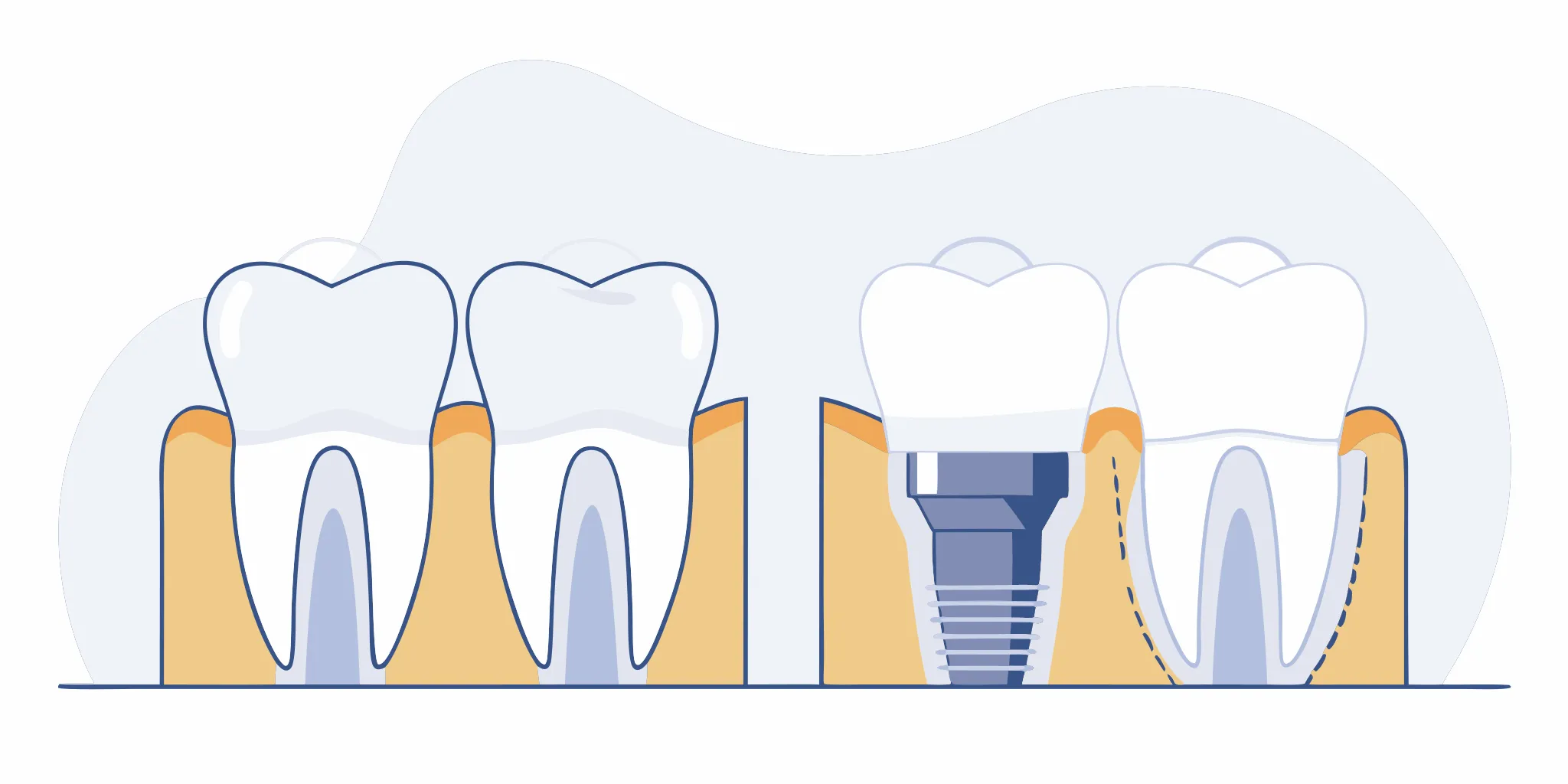
A custom abutment allows the dental laboratory to engineer the subgingival contour precisely for each patient, eliminating the over-contouring common with stock components. Key design parameters include abutment margin position relative to the gingival crest, wall angle, and emergence angle of the crown margin.
The emergence profile refers to the contour of the restoration as it emerges from the soft tissue. A properly designed emergence profile is critical for natural-looking gingival architecture and long-term tissue health. Custom abutments allow the dental laboratory to engineer the emergence profile precisely for each patient’s anatomy.
- Stock abutments provide a pre-formed, one-size-fits-all profile that often leads to over-contouring, which can trap subgingival cement and create inflammatory complications.
- Custom abutments eliminate the gap between the abutment and the gingival sulcus, producing a smooth surface that resists bacterial colonization.
- NCBI research confirms that custom abutments facilitate the creation of an ideal emergence profile, enhancing soft tissue contour and esthetic outcomes.
This is especially important in the anterior region, where the papilla height and gingival zenith position must be preserved. By designing the abutment to support the peri-implant soft tissue architecture, the clinician achieves a result that resembles a natural tooth emerging from the gingiva.
The key design parameters controlled through CAD/CAM include the position of the abutment margin relative to the gingival crest. The angle of the abutment wall, and the emergence angle of the crown margin. Each variable is managed during the design phase, giving the laboratory complete authority over the result.
Investing time in the abutment design phase pays dividends during delivery. A well-designed custom abutment seats passively, requires minimal chairside adjustment, and supports the final restoration with predictable stability. This reduces placement time and increases clinician confidence in the long-term outcome. Digital versus conventional implant impressions play a foundational role in capturing the data needed for this level of precision.
CAD/CAM Design and Milling Considerations for Dental Laboratories
The digital workflow begins with intraoral scanning of the implant position and surrounding tissues. CAD software designs the abutment geometry, including margin line, emergence profile, and implant-abutment interface. Five-axis CNC milling produces tolerances within ten microns, ensuring passive seating on the implant platform.
The digital workflow for custom dental implant abutments begins with accurate intraoral scanning of the implant position and surrounding tissues. The digital impression captures the implant scan body geometry, the adjacent dentition, and the soft tissue profile. These data points serve as the foundation for the abutment design.
CAD/CAM software uses this data to design the abutment geometry with precision. The design process includes:
- Establishing the margin line relative to the gingival crest
- Optimizing the emergence profile for tissue support
- Verifying the implant-abutment interface fit to prevent rocking or strain
- Adjusting abutment angle, height, and contour to match clinical requirements
- Generating the milling toolpath for five-axis CNC fabrication
Once the design is finalized, the milling process begins. The material block is machined using a five-axis CNC mill that produces tolerances within ten microns. This level of precision ensures that the abutment seats fully on the implant platform without rocking or introducing strain into the implant system. After milling, the abutment is sintered if it is zirconia or cleaned and inspected if it is titanium.
The digital workflow eliminates the variability associated with traditional casting techniques. Connect your intraoral scanner to streamline digital case submission and reduce turnaround time. Next Dental Lab’s digital ecosystem integrates with Trios, iTero, Medit, 3Shape, and other common scanner platforms. The design queue processes the abutment geometry and provides a digital preview for clinician approval before milling begins.

Clinical Outcomes: Comparing Titanium and Zirconia for Long-Term Success
Both titanium and zirconia custom abutments demonstrate excellent biocompatibility and long-term clinical performance. NCBI research shows neither material holds a clear advantage for overall implant survival when properly selected and fabricated. The decision hinges on site-specific mechanical and biologic demands.
Both titanium and zirconia custom abutments demonstrate excellent long-term clinical performance when matched to the appropriate clinical scenario. NCBI research confirms that both materials exhibit good biocompatibility and low plaque accumulation profiles. Neither material shows a clear advantage for overall implant survival when properly selected and fabricated.
Platform-switching techniques, often integrated into custom abutment designs, may contribute to marginal bone level preservation. By shifting the abutment-implant interface inward from the implant shoulder, platform-switching moves the inflammatory cell infiltrate away from the crestal bone. This design feature is independent of abutment material and should be considered for all single-implant restorations.
Proper seating and torque of the custom abutment is critical for long-term success regardless of material choice. The abutment must be fully seated on the implant platform and tightened to the manufacturer’s specified torque value. A properly torqued custom abutment provides a stable foundation for the final crown and minimizes the risk of screw loosening or abutment fracture over time.
The evidence supports a straightforward clinical framework:
- For high-load posterior sites, choose titanium.
- For esthetic-demanding anterior sites, choose zirconia.
- For cases where both esthetics and load are concerns, choose a hybrid titanium-zirconia design.
- In all cases, ensure the abutment is custom-milled with CAD/CAM precision by an experienced dental laboratory partner.
Related clinical topics such as screw-retained versus cement-retained restorations and full arch implant provisional workflows also depend on sound abutment selection for predictable outcomes. Outsourced all-on-4 laboratory services benefit from the same digital abutment workflow and material science principles.
Frequently Asked Questions About Custom Dental Implant Abutments
What is a custom dental implant abutment?
A custom dental implant abutment is a personalized connector piece that links the implant post to the final restoration. It is digitally designed and milled from a scan of the patient’s anatomy to match the unique gum contours, tissue depth, and implant angle.
Are titanium or zirconia custom abutments better?
Neither material is universally better. Titanium offers superior fatigue resistance and is preferred for high-load posterior sites. Zirconia provides superior soft tissue color outcomes and is ideal for the esthetic zone. Hybrid designs combine a titanium base with a zirconia coping for cases requiring both strength and esthetics.
How do custom abutments improve the emergence profile compared to stock abutments?
Custom abutments allow the technician to engineer the subgingival contour precisely for each patient, creating an ideal emergence profile that supports the gingival architecture. Stock abutments use pre-formed shapes that often lead to over-contouring and subgingival cement entrapment.
What is the process for placing a custom dental implant abutment?
The process involves four stages: digital impression of the implant site, CAD design of the abutment geometry. CNC milling of the material, and clinical delivery where the abutment is torqued into the implant and the final crown is placed.
Do I really need a custom dental implant abutment?
For any restoration where emergence profile, esthetics, or implant angle deviation is a concern, a custom abutment provides measurable advantages. Stock abutments work only for straightforward implant positions with healthy tissue contours. For the aesthetic zone or angulated implants, custom abutments are strongly recommended.
Partner with Next Dental Lab for High-Precision Custom Abutments
Selecting the optimal material for each clinical scenario requires a laboratory partner with the digital capabilities to execute complex abutment designs. Next Dental Lab combines full-service implant expertise with a streamlined digital workflow that accepts scans from any major intraoral scanner system. Every custom abutment is designed with CAD/CAM precision and milled to tolerances that ensure a passive fit.
Reduce turnaround time and eliminate the guesswork of material selection.
Connect your intraoral scanner and submit your digital case today. Our implant team will guide the abutment design to match your clinical specifications.